
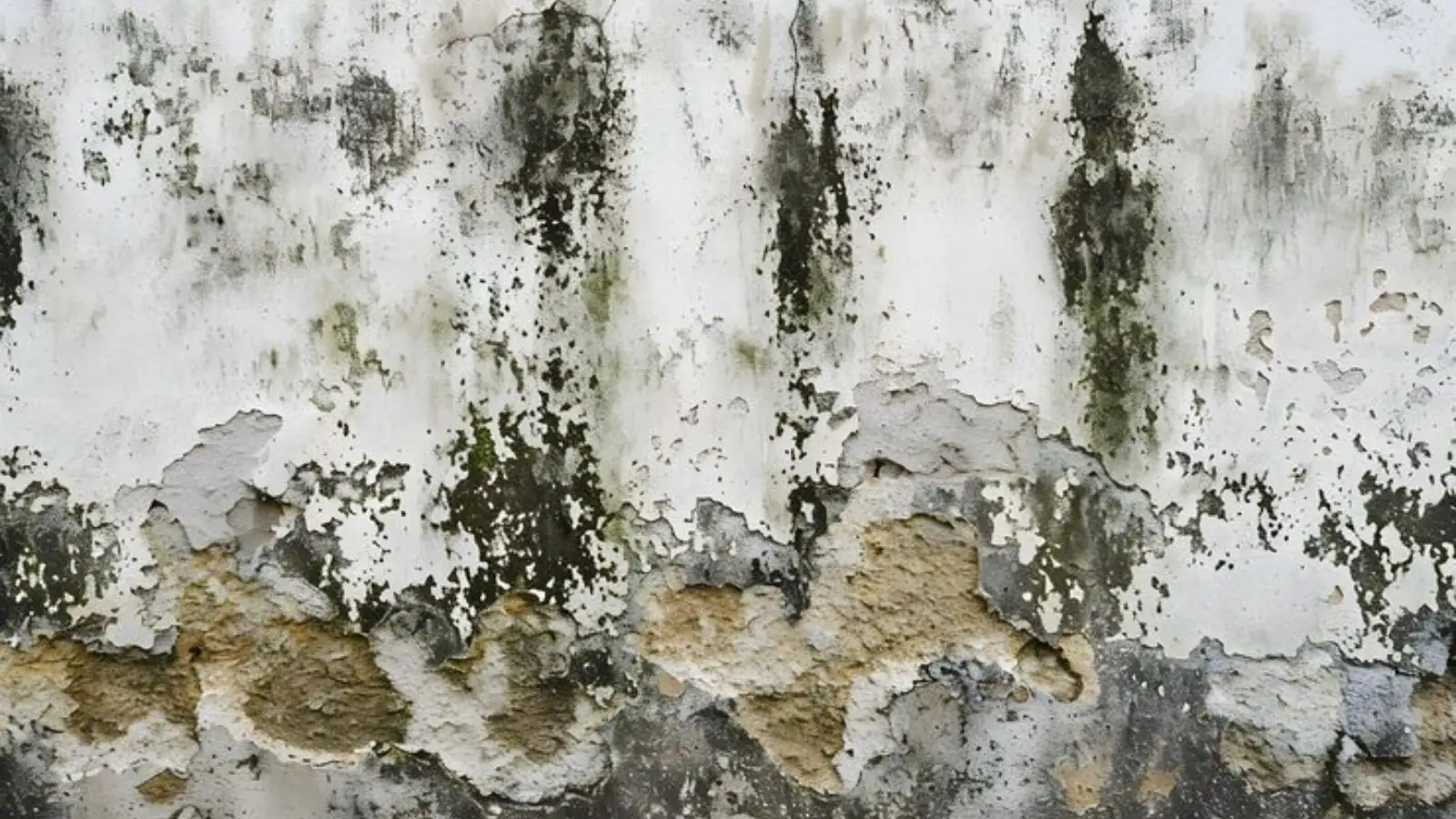
What people mean by black mold
Black mold is a nickname. In everyday use it covers any dark green or black growth on drywall, grout, wood or carpet. A narrower use points to one species, often named in articles as Stachybotrys chartarum, which tends to appear on materials that stay wet for a long time.
That gap between the nickname and the science causes most of the confusion. A homeowner who sees a dark patch and searches for black mold is usually reading about one organism while looking at something that may be quite different.
This guide sticks to what you can see and verify at home. It does not describe health effects, because health questions belong with a physician.
Why color cannot name the species
Mold comes in many colors, and the same organism can look different depending on what it is growing on, how old it is and how much light and moisture it gets. Dark growth is not proof of any particular species, and pale growth is not proof of a harmless one.
Dust, soot, soap residue and old water stains can all look like mold from a distance. Mildew on a bathroom wall and a dark ring from a past leak can both pass for the real thing until someone checks the surface and the moisture behind it.
So the useful question is not what color it is. The useful question is where the moisture came from and whether it is still there.
Found a dark patch and not sure what it is? Call the dispatch line, describe the spot and any water nearby, and we will say what a first visit would examine.
☎ (760) 769-1159What testing can and cannot tell you
Testing exists for good reasons, but it answers narrower questions than most people expect. The table below shows what each common approach can address.
| Approach | What it can show | What it cannot show |
|---|---|---|
| Visual inspection with moisture readings | Where growth is, how far it spreads and which materials are wet. | The species, or whether the air has changed. |
| Air sampling | A snapshot of spore counts in a room at one time, compared with a reference sample. | A full picture of the building or a long-term trend. |
| Surface or tape sampling | Whether the material on a surface is mold and which types are present. | Why it grew or how far it reaches behind the wall. |
| Post-remediation clearance testing | Whether the cleaned area meets the agreed target after work. | Whether a new leak will cause growth later. |
Whatever test is chosen, the result describes a moment and a place. It does not replace finding the moisture source, and it does not give a diagnosis of anyone's health.
Where dark growth hides and what the clue is
Mold needs moisture, so the location of dark growth almost always points to a water source. The pattern is the clue.
| Where you see it | Likely moisture source | First check |
|---|---|---|
| Ceiling near a bathroom fan | Steam with poor ventilation, or a supply leak above. | Fan operation, the attic side and any stain pattern. |
| Bottom of an exterior wall | Rain intrusion, a sprinkler spray or a drain problem outside. | Grade, gutters and the siding gap. |
| Under a sink | A weeping trap or supply fitting. | Dry the cabinet and look at each joint. |
| Closet corners | An air conditioner drain or a wall leak. | The nearest unit and the baseboard. |
| Under carpet edges | A slow leak or a past flood. | Lift a corner and check the pad and tack strip. |
Beachside areas such as the streets near Moonlight State Beach or Cardiff-by-the-Sea are no exception. Wherever you live, the check is the same: find the water, stop it and dry the area.
What to do when you suspect it
- Stop the moistureFix or shut off the leak and run a dehumidifier if the air feels damp.
- Leave the growth aloneDo not brush, sand or blow air across it, because that moves material around.
- Document the areaTake wide and close-up photos, and note when you first saw it.
- Get an assessmentAsk for moisture readings and a written scope before anyone removes anything.
If the growth is small and on a hard, non-porous surface, some homeowners clean it themselves with ordinary care. If it sits on drywall, carpet or insulation, or covers a larger area, or the moisture source is unknown, an assessment is the safer path.
Who handles what
Finding and removing growth is the work of mold remediation, which includes containment, careful removal and cleaning of the surrounding area. ANSI/IICRC S520 is the published standard that sets out how such work is planned, and a fair question for any bidder is whether its crews follow it.
If a wet event came first, such as a burst pipe or an overflow, the earlier stage is water damage cleanup, where wet materials are removed and the area is sanitized. Doing that step quickly is often the best way to keep mold from starting.
Homeowners in San Marcos and Carlsbad raise the worry we hear in Encinitas, and our first reply is a question about moisture. Find out whether your state licenses mold work, and get a written scope in hand before you agree to anything.
Encinitas note: coastal places, same moisture rule
Encinitas includes beachside communities such as Cardiff-by-the-Sea, and landmarks such as Moonlight State Beach draw many residents near the ocean. Living close to the shore does not change the basic mold rule, which is that growth follows moisture. The practical tie-back is to look closely at windows, door thresholds, bathroom fans and the corners of exterior walls in your own home.
Make a habit of checking those spots after rain and after heavy use of showers. If you find a dark patch, note the exact location and take a photo before anything is cleaned, because the position helps an inspector trace the source.
Frequently Asked Questions
No. Dark color is common to many organisms and is not proof of any one species. Only sampling and laboratory work can identify what a growth is, and even then the result describes that sample.
A kit can suggest that mold is present, but it cannot explain the moisture source or the extent behind a wall. A visual inspection with moisture readings usually answers more of the practical questions.
Surface cleaners may not reach growth inside porous materials such as drywall or carpet pad, so cleaning alone is not a fix. Stop the moisture first, and ask for an assessment if the growth is on drywall, carpet or insulation.
The method stays the same anywhere in Encinitas. Look for moisture at windows, thresholds, fans and exterior wall corners, and send health concerns to a physician.