
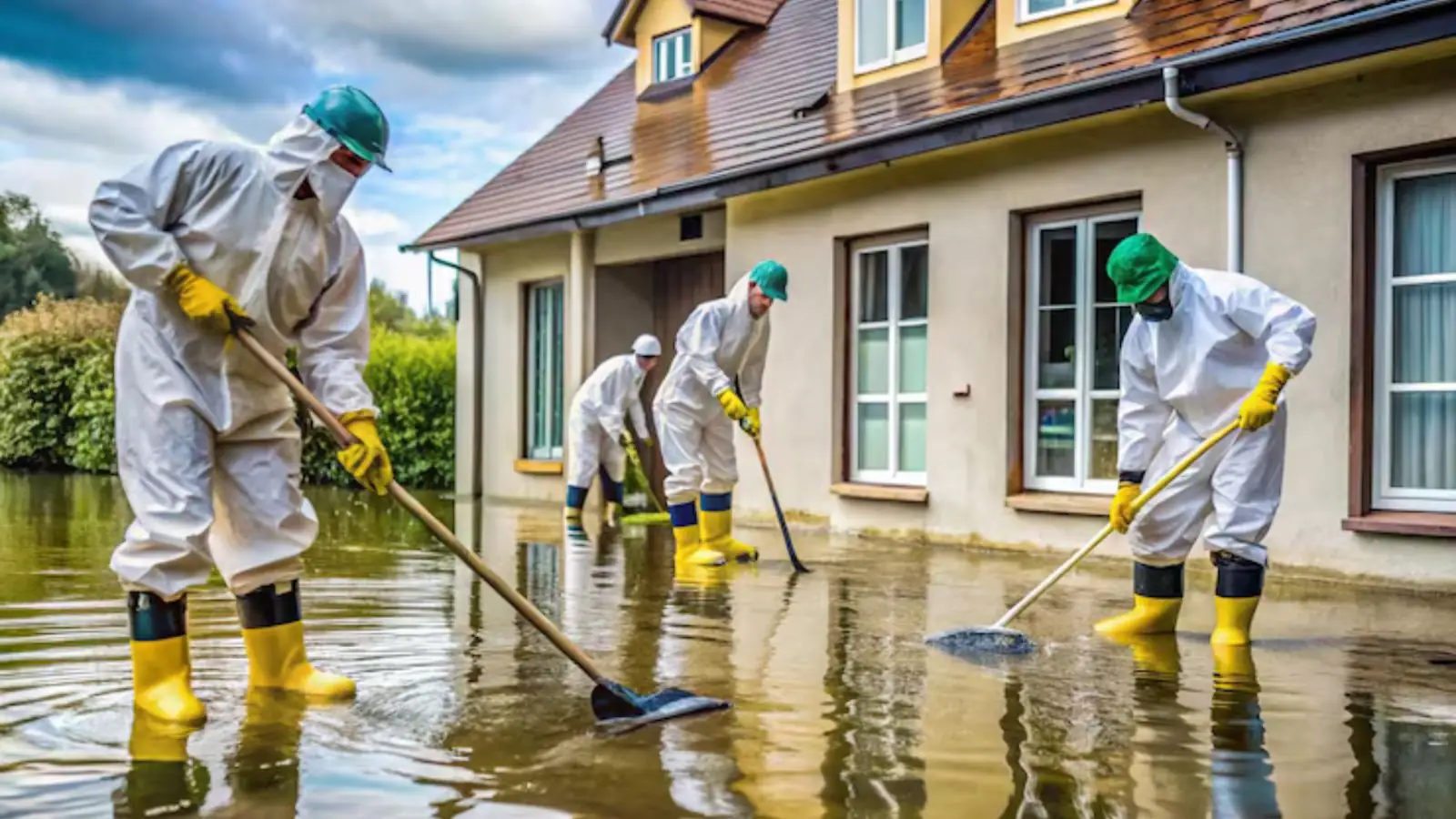
Flood damage restoration is the recovery of a home after storm water, creek overflow, groundwater or sewage has entered it. Because that water is usually Category 2 or 3, it carries contamination, and restoration means removing affected materials, cleaning and sanitizing, and drying the structure.
If flood water is in your Encinitas home now, treat it as an emergency. Our dispatch line is open 24/7. While you wait, stay out of standing water, keep children and pets away, move valuables up and off the floor, and leave the power alone unless the panel is dry and you can reach it safely.
When flood water is coming in or already inside
Flood losses move fast. Water that came in with a storm can wick up drywall and soak insulation within hours, and mud and debris carry bacteria into every crack. We answer after hours, on weekends and through storm nights, and same-day response is offered when available.
We do not quote an arrival time, because roads and conditions change. What we can do on the first call is tell you which steps are safe, what to photograph and what to leave alone until a crew has looked at it.
Before you call: stay safe
Do not walk through flood water that could be touching outlets, extension cords, a water heater or the main panel. Shut power off only if the panel is dry and you can reach it without stepping in water. If you smell gas or see sparks, leave the house and call the utility or 911 before you call the restoration line.
Do not drive through flooded streets to reach the house, and do not use a household vacuum on wet floors.
Not sure whether it is a flood, a backup or a roof leak? Describe it to dispatch and we will sort out which kind of job it is.
☎ (760) 769-1159What kind of flood is it?
The source tells us what the water carries, how long it has been there and which materials are at risk. This table is the quick version we use on the phone.
| Water source | Usual category | What it means for the home |
|---|---|---|
| Rain through a roof or window | Category 1 early, can worsen with time | Dry quickly and many materials survive. Ceilings and insulation need checking. |
| Storm runoff or creek overflow | Category 3 | Mud and contaminants. Porous materials are removed and surfaces sanitized. |
| Groundwater seeping through a slab or wall | Category 2 or 3 | Slow and persistent. Moisture mapping finds the full extent. |
| Sewage backup | Category 3 | Strict protective steps. Anything porous that touched it is removed. |
Category 1 water can slip into Category 2 or 3 as it sits. The ANSI/IICRC S500 standard describes these categories, and you can ask any company whether its crews work to it.
How flood restoration works
- Safety and sourceWe confirm the water is no longer rising, note any electrical or gas concerns and document conditions with photos and moisture readings.
- ExtractionPumps and extraction units remove standing water. See emergency water removal for how the heavy pumping is handled.
- Removal of contaminated materialsWet carpet, pad, insulation and drywall that touched dirty water are cut out and bagged. Hard surfaces are cleaned and sanitized.
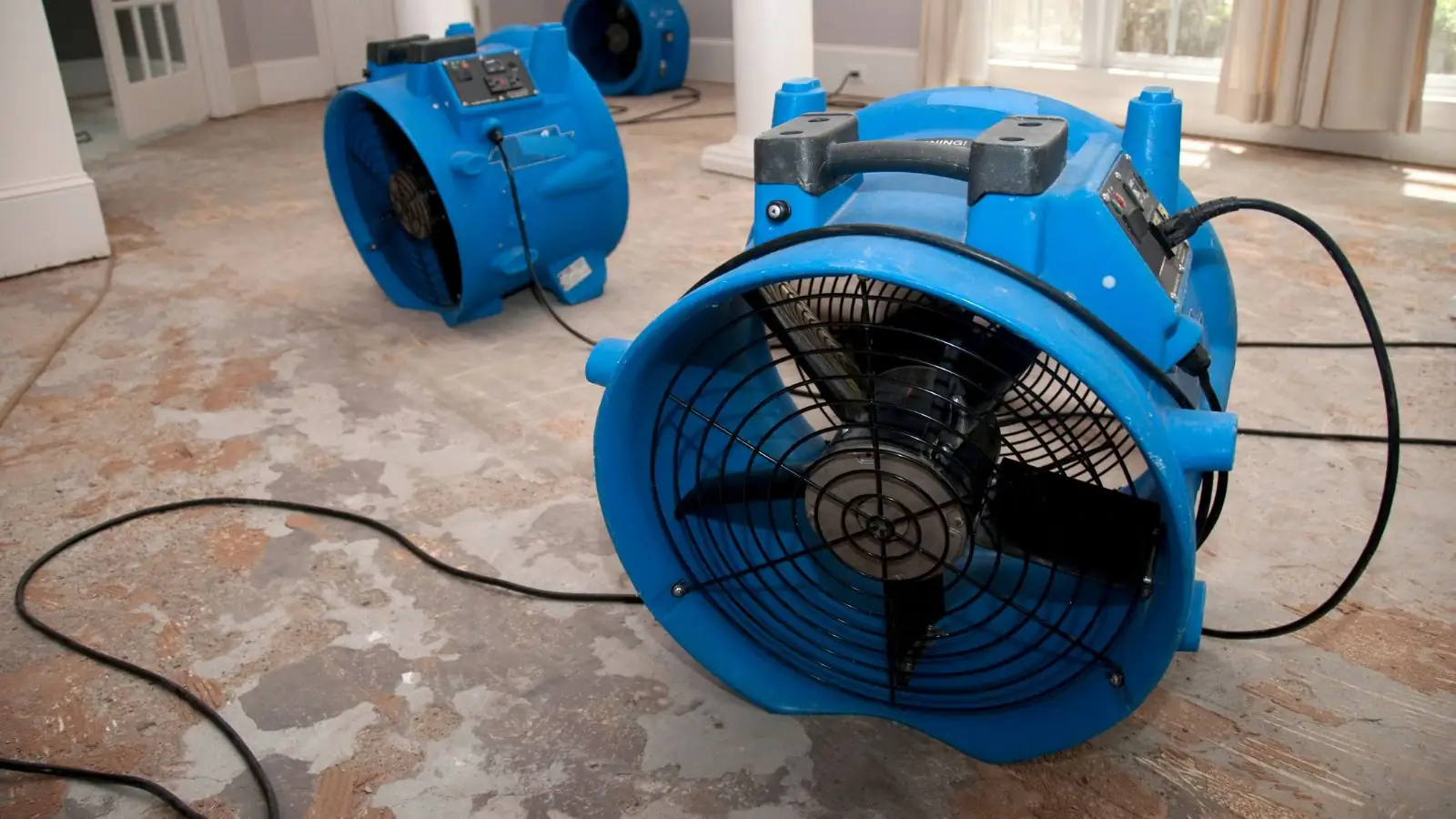
- DryingAir movers, LGR dehumidifiers and sometimes desiccant units pull moisture out of framing and subfloors while we track readings daily. This phase is covered by water mitigation.
- RebuildOnce the structure is dry, drywall, flooring and paint go back in. That is a separate scope, described under water damage repair.
Scope and price are explained before work starts, including which materials we recommend removing and why. If you disagree with a call, say so, and we will walk through the moisture readings behind it.
Basement Flooding Cleanup
If your home has a basement, a lower-level room or a sunken garage, those spaces take the water first. Water pools there, power outlets sit low, and finished walls can hide a lot of wet insulation.
Pumping a basement too fast can be a mistake when the soil outside is still saturated, because pressure from the ground can stress the walls and floor. We pump in stages and watch the water level outside the house. Once the space is empty, we remove wet carpet and pad, cut out drywall to the height the moisture reached and set drying equipment.
Keep a list of what was stored down there and photograph it before you move anything. If you are asking whether a restoration crew can stop the water from coming back, it cannot, and the FAQ below explains who can.
Sewage Backup Cleanup
Sewage coming up through a floor drain, tub or toilet? Stop using water in the house, because every flush and drain adds to the problem. Stay out of the affected room and keep children and pets out.
Sewage is Category 3 water. Crews wear protective gear, remove porous materials the water touched, clean and sanitize hard surfaces and use air scrubbers and dehumidifiers to dry the space. Fans are not run through sewage because they spread contaminants.
Responsibility starts with a simple question. Sewer backups split by location. The city places the private lateral, meaning the pipe from the house out to the street main, on the property owner, along with repair and overflow cleanup. Once sewage is in the main itself, the city is the responsible party.
If every drain in the house backs up at once, call your plumber or the city to find out which side of that line is blocked before you decide who pays.
Flood exposure in Encinitas
The City of Encinitas hazard mitigation plan records significant storm damage in 1997, 2005 to 2006 and 2010 to 2011. In 2005, heavy rain closed the intersection of El Camino Real and Leucadia Boulevard. The practical lesson is to plan an alternate route to and from home during storms, because the roads can close before the house floods.
The plan names flood-prone areas, including Escondido, Encinitas and Cottonwood Creeks, low-lying parts of Leucadia and Old Encinitas, and the Cardiff coastline near Restaurant Row. It also notes a chronic history of rainwater flooding in Leucadia near North Coast Highway 101 and North Vulcan Avenue. If your home is in one of those pockets, keep sandbags and photo records of your floors ready before the wet season.
The plan counts 40 residential and 138 commercial buildings in the 100-year flood exposure, and 53 and 155 in the 500-year exposure. Those are small numbers for a city this size, which is why many owners never look up their risk. Check the FEMA flood map for your address and ask the City Building Division about your lot.
San Elijo Lagoon marks the southern edge of Encinitas, and its 721-acre ecological reserve is reached from Interstate 5 north of Solana Beach. If your home sits near the lagoon, look up your address on the FEMA flood map and read how we handle the neighboring side on our Solana Beach page.
Restoration options and honest trade-offs
Full restoration
Removes every affected material and rebuilds. It costs the most and is the usual answer for Category 3 water.
Targeted removal
Cuts out only what the water reached, based on moisture mapping and thermal imaging. It can save money if the readings support it.
Dry and monitor
Works only for clean, early water. If readings stall, the job must escalate to removal.
Waiting for the insurer
A slow claim does not stop the damage. Ask your insurer whether emergency steps to protect the home are covered, and keep receipts for anything you do.
Insurance and flood coverage
Standard homeowners policies typically exclude flood. The California Department of Insurance says flood coverage is the federal National Flood Insurance Program, which it does not regulate, and a new policy typically takes effect 30 days after purchase. NFIP claims can be reported at 1-800-638-6620.
The department also defines an NFIP flood as inundation of two or more acres of normally dry land or of two or more properties, one of which is yours. The California FAIR Plan does not cover storm-related damage unless you have a supplemental difference-in-conditions policy. Read your policy or ask your insurer which cause applies. We document the damage thoroughly, but we do not promise approval or bill insurers directly.
What drives the cost of flood restoration
- Water category. Category 3 requires removal of more materials and protective procedures.
- Affected area. How many rooms and how many square feet the water reached.
- Materials involved. Tile, hardwood, carpet, drywall and insulation each carry different costs.
- Drying days and equipment. Saturated slabs and framing can need extra days.
- Rebuild scope. Removal is one price and replacing finishes is another.
Want your real number? Call (760) 769-1159 and tell us what the water reached. We explain scope and price before work starts.
After the water is gone
A flood house should be dry and clean before anyone paints or installs new flooring. If you notice a musty smell or dark spots a week later, call about water damage cleanup follow-up or mold remediation before covering anything over.
Frequently Asked Questions
Yes. The dispatch line is answered 24/7, including storm nights, weekends and holidays, and same-day response is offered when available. We do not promise an arrival time, but the first call covers safe steps, what to photograph and what to leave alone.
No. Restoration removes water and damaged materials and dries the structure. Waterproofing is a separate trade that deals with drainage, foundation cracks and grading to keep water out. If water keeps returning, ask a licensed waterproofing or foundation contractor, and verify the license on the California Contractors State License Board website.
Stop using water, stay out of the area and keep children and pets away. Call your plumber to clear the blockage and call us to handle the cleanup. If you smell gas or see electrical hazards, call the utility or 911 first.
The City of Encinitas says the owner is responsible for the private lateral from the building to the street main, and the city is accountable once sewage enters the main. A plumber can camera the line and show which side the problem is on.
Standard policies typically exclude flood, and flood coverage usually comes from the National Flood Insurance Program or a separate policy. Sudden internal leaks are a different cause, so check your policy or ask your insurer before you decide.
Drying often takes several days and the rebuild afterward is a separate phase, but timing depends on the water category, the materials and how saturated the structure is. Moisture readings tell us when drying is complete.