
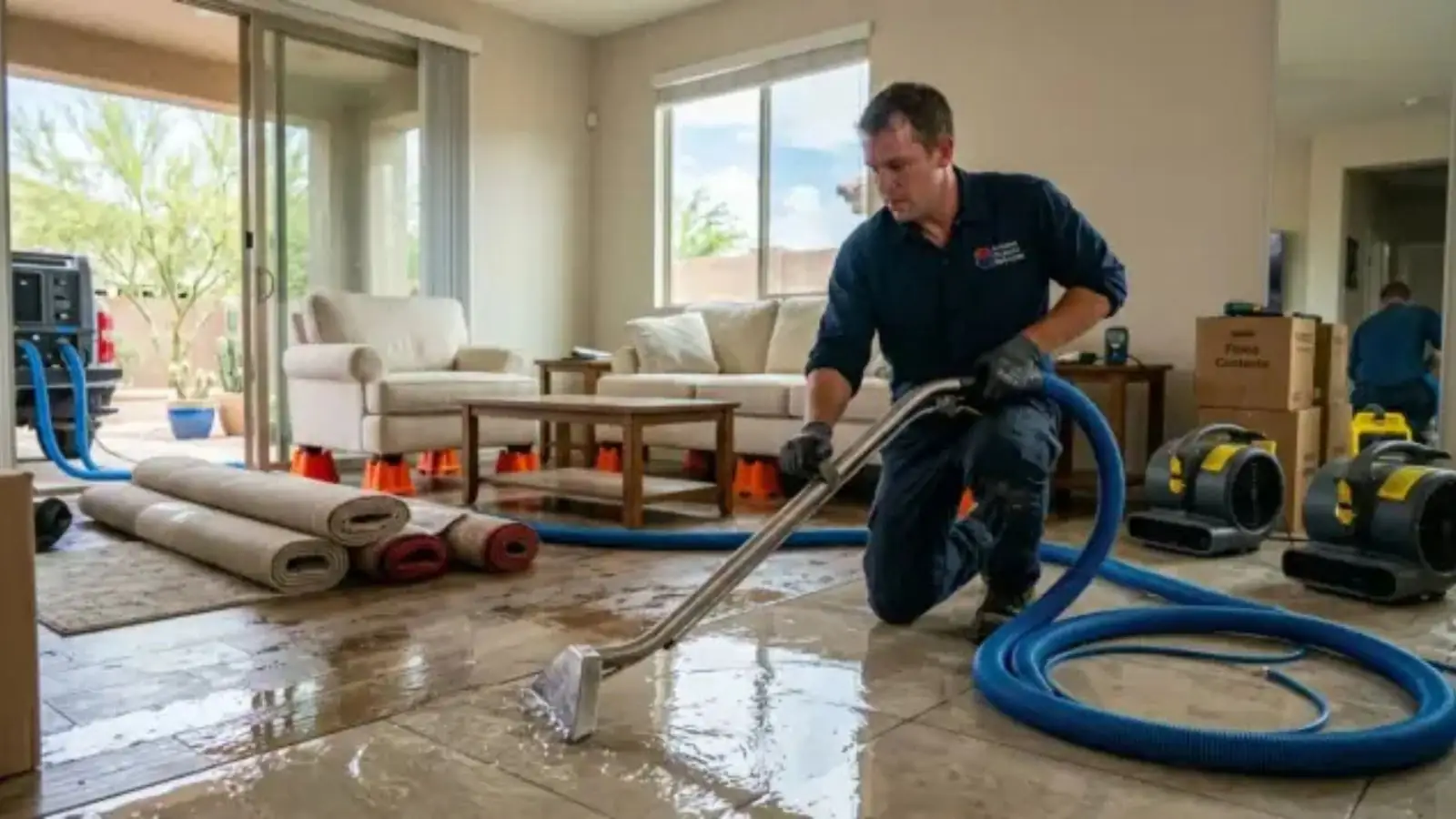
Standing water in a home is an emergency, and our dispatch line is open 24/7 for it. Emergency water removal is the pump-and-extraction stage that pulls standing water off floors and out of carpet, subfloors and low rooms. While you wait, shut off the water at the main valve if the source is a pipe, cut power to wet areas only if you can reach the panel dry, and lift valuables off the floor.
Removal happens first because every hour water stays in a structure, it soaks further into drywall, padding and wood. Same-day response is offered when it is available, and after-hours calls are handled the same way as daytime ones. After the water is out, water mitigation dries what is left.
When Standing Water Is an Emergency
Not every wet floor is a crisis, but several situations should never wait for morning. Treat it as an emergency when any of these is true.
- Water is still running from a pipe, fixture or appliance.
- More than a thin film covers a floor, or water has reached a second room.
- Water is touching outlets, baseboard heaters, an electrical panel or an appliance.
- The water is brown, gray or smells like a drain, which suggests sewage or ground contamination.
- Water is dripping through a ceiling light fixture or is pooling above a ceiling.
- Carpet, padding or a hardwood floor is saturated and visibly spreading.
If you are unsure, call and describe it. Dispatch can tell you whether an assessment visit is needed or whether you can handle it with towels and a wet vacuum.
Water is on the floor right now? Dispatch is on the line at any hour, so call and say where the water is and where it came from.
☎ (760) 769-1159Safety First: Electricity and Sewage
Before you call us, read this
If water is touching outlets, a panel, a power strip or an appliance, stay out of the room. Cut power at the panel only if you can reach it while standing on dry ground, and never touch a switch with wet hands. For any sign of sparking, a burning smell or a gas smell, leave the building and call 911 or your utility before you call the restoration line.
If the water came from a toilet, a floor drain or a sewer line, do not wade through it or use fans on it. Keep people and pets out, and call us so the contaminated area can be handled safely.
How Emergency Water Removal Works
The first step is stopping the source and checking safety. Then the crew removes standing water with the right tool for the volume.
- Confirm the source is stoppedTechnicians locate the shut-off or isolate the line, so water is not being added while it is being removed.
- Extract the standing waterSubmersible pumps move deep water. Truck-mounted or portable extraction units pull water out of carpet, padding and hard floors.
- Pull up what holds waterSoaked carpet padding often has to come out the same day, because it keeps water against the subfloor.
- Check where the water wentMoisture meters and thermal imaging show whether water traveled under baseboards or into wall cavities.
- Hand off to dryingAir movers and LGR dehumidifiers take over. That stage is described on the water mitigation page.
Removal is the stage that stops the clock. Drying, cleanup and rebuilding are separate stages with their own steps, and each one is explained before it starts.
Burst Pipe Water Damage
A burst pipe can move a lot of water in a short time, which is why shutting the main valve is the first step. Know where your main shut-off is before you ever need it, because a pipe under a sink or inside a wall keeps running until that valve is closed.
Once the water is off, open cabinet doors under the affected fixture so air can reach the cabinet floor. Remove wet items from the area, and photograph the damage and the failed pipe before anything is cleaned up. Your insurer may want to see both.
Crews then extract the standing water, remove saturated padding or toe-kick boards that hold moisture, and check the wall cavity behind the burst for hidden wetness. A burst inside a wall is the case most likely to be missed, because water follows framing before it shows on the surface.
The plumbing repair itself is a plumber's job. We pair the water removal with your plumber's timing so the line is repaired and the structure starts drying on the same day when possible.
Crawl Spaces and Whole-Home Flooding
Water in a crawl space or under a house is easy to ignore and expensive to leave. It can come from a broken irrigation line, a failed supply pipe or runoff after heavy rain, and it sits against framing and insulation where nobody sees it. If you can hear dripping or smell damp earth under the floor, call and describe it.
When water has covered a whole floor or several rooms, the job is bigger than a pump and a wet vacuum. The crew works room by room, extracting the deepest areas first, and the scope is explained before the heavy equipment goes in. Rain-driven flooding that is moving across the property is covered in more detail under flood damage restoration.
Where Flooding Hits in Encinitas
The city's own hazard mitigation plan flags localized flooding in Leucadia, with a chronic history of rainwater flooding mainly near North Coast Highway 101 and North Vulcan Avenue. It also names low-lying parts of Old Encinitas and the coastline in Cardiff as flood-prone. If your home or shop sits in one of those pockets, keep a wet vacuum and a few sandbags where you can reach them before the rainy season.
Rain falls mostly between November and March on the San Diego coast, so water-removal calls tend to follow storms. If a drain is backing up or a creek channel is high, do not walk through the water to check the damage. Call first, and stay out of any water that looks or smells contaminated.
Neighboring towns see the same weather. Our Del Mar water damage page covers service to that part of the coast.
Removal, Mitigation and Cleanup: Which One Do You Need
| Stage | What it is | When it applies |
|---|---|---|
| Emergency water removal | Pumps and extraction units pull standing water out now | Water is on the floor or soaked into carpet and padding |
| Water mitigation | Drying, moisture mapping and stopping hidden damage over 24 to 72 hours | The surface water is gone but walls, floors and framing are still wet |
| Water damage cleanup | Removing wet debris, sanitizing and deodorizing | Contaminated or dirty water, or materials that must be hauled out |
| Water damage repair | Rebuilding drywall, flooring and paint | The structure has been dried and tested |
Most emergencies use at least the first two. Dispatch can explain which stages apply to your loss when you call, and the stages are quoted separately so you see the scope for each.
What Changes the Cost of Water Removal
No honest number exists until the water is measured. These five factors set the scope.
- Water category. Clean supply water, gray water and sewage each need different handling and disposal.
- Affected area. Square footage and depth decide how much extraction equipment and time the job needs.
- Materials involved. Carpet, pad, hardwood, tile and subfloor are each handled differently.
- Drying days and equipment. Extraction only starts the process, and drying equipment runs for days afterward.
- Rebuild scope. What must be torn out and replaced adds to the total beyond the removal itself.
Want your real number? Call dispatch, describe the water, and an assessment will set the scope. Scope and price are explained before work starts.
Insurance Notes for Water Emergencies
Sudden and accidental water damage, such as a burst pipe or an appliance failure, is often covered by homeowners insurance. Gradual leaks and neglect often are not. Flood damage is usually excluded and needs separate flood coverage, so check your policy or ask your insurer before you assume either way.
Document before you discard. Take photos and video of the water, the source and the affected rooms, and keep samples of materials your insurer may ask about. We keep written notes of what was removed and why, which helps when an adjuster reviews the loss. If the water was contaminated, water damage cleanup is the next stage.
The standard behind the work
Published standards guide this kind of work. ANSI/IICRC S500 covers professional water damage restoration, and the same body's S520 covers mold remediation. We cite them as the industry references, and we do not claim a certification beyond what we can show you on paper.
Frequently Asked Questions
Yes. The dispatch line is answered 24 hours a day, every day, and after-hours and weekend calls are treated the same as weekday ones. Same-day response is offered when it is available, and we never promise an arrival time before we know the situation.
Stop the source if you can, usually at the main valve. Cut power to the wet area only if you can reach the panel dry. Lift valuables, open cabinet doors under the leak and keep people and pets out of dirty water.
Submersible pumps move large volumes of standing water. Extraction units pull water out of carpet, pad and hard floors where pumps cannot reach.
For a thin, clean spill, yes. For anything deeper, spreading into walls or contaminated, a wet vacuum will not reach hidden water, and sewage should never be handled that way.
Often yes. Water under a home soaks framing and insulation out of sight, so call and describe what you hear or smell.
Coverage tends to follow the cause. A burst pipe is commonly covered, rising floodwater usually is not, and your own policy language decides which applies.