
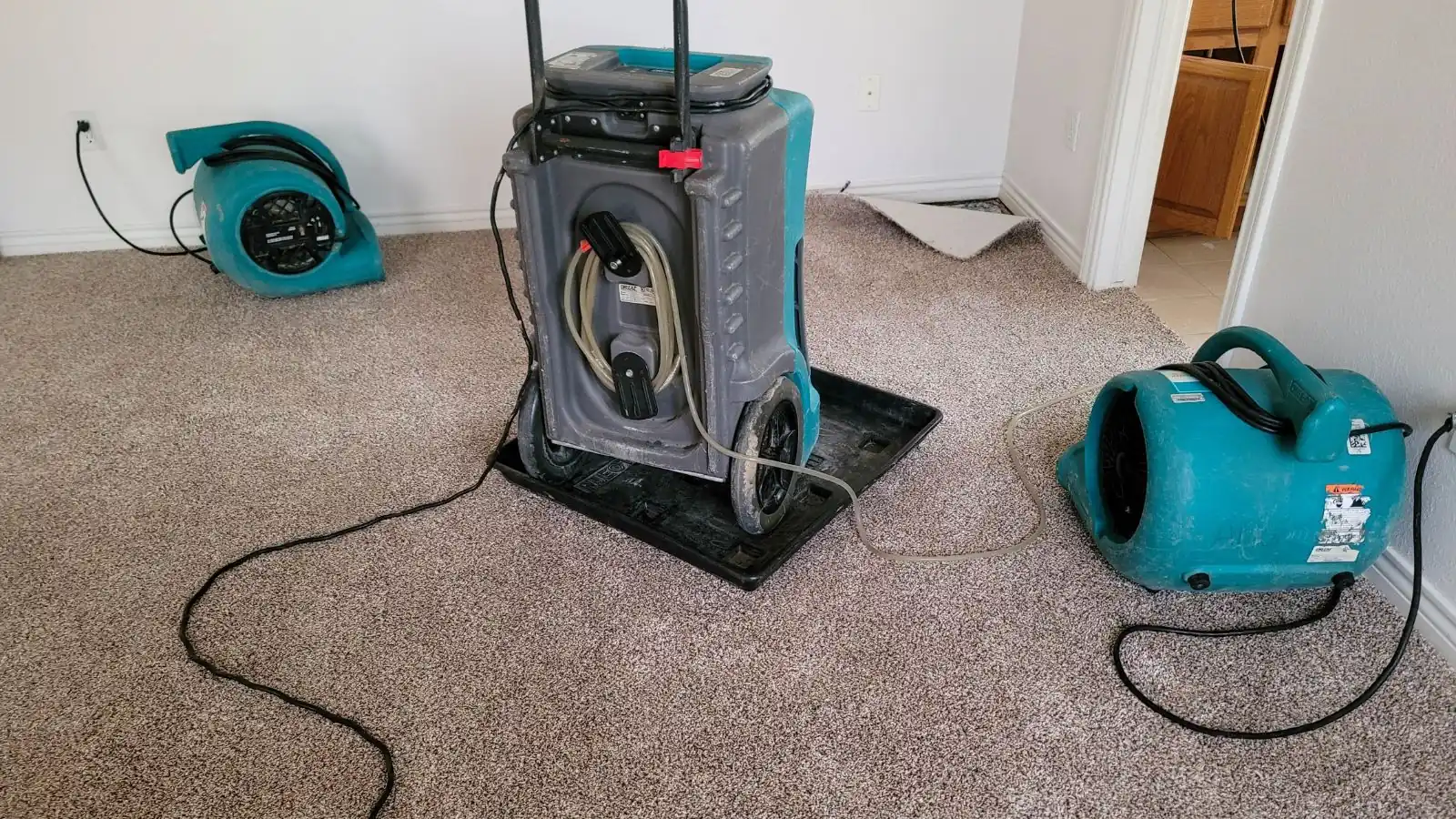
Water damage cleanup is the work that begins once the leak or flood is stopped. It means removing standing water and wet debris, taking out materials that cannot be saved, and sanitizing and deodorizing everything that stays.
If water is in your Encinitas home right now, treat it as an emergency, because the first 48 hours decide what can be dried and what has to be torn out. Our dispatch line is open 24/7. While you wait, close the main water valve, keep people and pets out of dirty water, lift small items off wet floors, and turn off power to wet areas only if the panel is dry and safe to reach.
When water is sitting in your home right now
Cleanup becomes urgent the moment water reaches carpet, drywall, cabinets or insulation. Porous materials soak water up like a sponge, and the longer they stay wet, the more likely they are to swell, smell and grow mold. A wet carpet pad that could have been dried on day one is often a throwaway by day three.
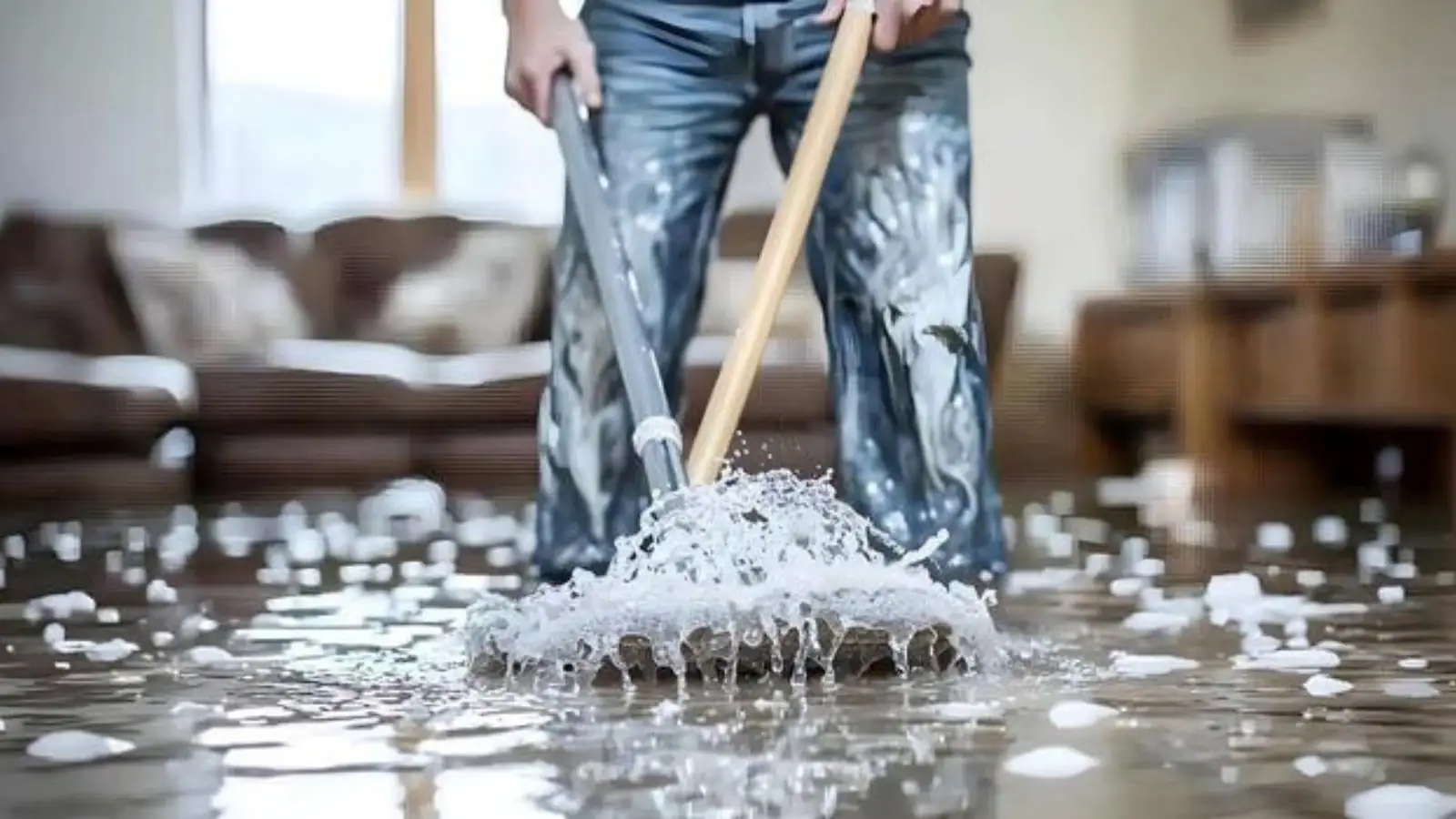
We take calls after hours, on weekends and on holidays, and same-day response is offered when available. We never promise an arrival time over the phone, but we do tell you honestly what the next hour should look like so you are not standing in a flooded kitchen guessing.
Safety first: electricity and sewage
If water is touching outlets, appliances or the electrical panel, stay out of the room. Cut power only if the panel is dry and you can reach it without stepping in water. For any electrical or gas risk, call the utility or 911 before you call the restoration line.
If the water came from a sewer line or toilet backup, do not wade in it, do not run fans through it and keep children and pets away. Dirty water needs protective gear and a different cleanup plan.
Still ankle deep or just damp walls? Tell dispatch what you are looking at and get a plain answer on the next step.
☎ (760) 769-1159What the first 48 hours of cleanup look like
Every house is different, but a good cleanup follows the same order. Skipping a step usually shows up later as a musty smell or a soft baseboard.
- Stop and photographThe source is shut off first. Then every wet room is photographed before anything moves, because that record matters for your insurance conversation.
- Remove the standing waterPumps and extraction units pull free water off floors. Our emergency water removal service covers the heavy pumping when the water is deep.
- Take out what cannot be savedSoaked carpet pad, wet insulation and drywall that has wicked water upward are removed and bagged so they stop feeding moisture back into the room.
- Clean and sanitizeHard surfaces and framing are cleaned, and an antimicrobial is applied where the water category calls for it.
- Hand off to dryingOnce the debris is gone, water mitigation takes over with air movers and dehumidifiers until moisture readings return to normal.
Water categories decide what gets removed
Cleanup is planned around the category of the water, not just the amount. The categories come from the published ANSI/IICRC S500 standard for water damage restoration, and any company you hire should be able to explain which category it believes you have and why.
| Category | Typical source | Cleanup approach |
|---|---|---|
| Category 1 | Broken supply line, overflowing sink, rain through a roof leak caught early | Extract, dry and clean. Many materials can be saved if they are dried quickly. |
| Category 2 | Washing machine or dishwasher discharge, toilet overflow with no solids | Extract, clean and sanitize. Carpet pad and some porous materials are usually removed. |
| Category 3 | Sewage backup, creek or storm flood water, long-standing wet materials | Protective gear, removal of porous materials, full cleaning and sanitizing. See flood damage restoration. |
Water can move up a category with time. A clean supply line leak left for several days in a closed room can behave like a Category 2 loss by the time anyone arrives.
Signs your cleanup is not finished
People often stop cleaning when the floor looks dry. The structure behind the surface tells a different story.
- A musty smell that returns on warm days or when the air conditioning runs
- Baseboards that cup, paint that bubbles or drywall that feels soft near the floor
- Carpet that feels cool or damp underfoot long after the water was removed
- Stains that spread or darken on a ceiling below a bathroom or kitchen
- Condensation on windows in a room that was wet, which can mean trapped moisture
A moisture meter and a thermal imaging camera find water that eyes and noses miss. We use both during an on-site assessment so the scope of work matches what is actually wet.
How we assess and clean a wet home
The assessment is an on-site walkthrough, not a sales pitch. We check how far the water traveled, take moisture readings in walls and floors, and photograph each affected area. You then get a written scope and the reasoning for it, and the price and scope are explained before any work starts.
The equipment is ordinary and worth knowing by name. Truck-mounted and portable extraction units remove water, HEPA air filtration handles dust from demolition, and air movers and LGR dehumidifiers dry what is left. Because cleanup and drying overlap, you may see both crews in the same visit.
If the damage reaches framing, flooring or finished surfaces, the rebuild is its own phase. Our water damage repair page explains what comes after the structure is dry.
Cleanup options and honest trade-offs
There is rarely one right answer, and a good contractor lays out the choices instead of selling the biggest job.
Dry in place
Faster and cheaper on the front end. It works when the water was clean, the material is solid and it was caught early. The risk is that hidden moisture stays behind.
Remove and replace
Costs more up front and creates a rebuild step. It is the safer call for soaked pad, insulation and drywall that has wicked water upward.
Partial removal
A flood cut removes drywall a set height above the floor and leaves the rest. It limits demolition but only works when the water line is clear and even.
DIY cleanup
Fine for a small, clean spill on a hard floor. It is a poor bet for wall cavities, sewage or anything wet for more than a day or two.
Encinitas sewers, rain and who is responsible
If the water came from a sewer backup, responsibility depends on where the blockage sits. Per the city, a backup caused by the private lateral is the owner's to fix. That pipe runs from the house to the street main, and the owner carries repair and overflow cleanup costs.
Once sewage enters the main, the city is accountable, so a plumber or the city can tell you which side of the line the problem is on before you commit to cleanup costs.
Rain is the other common source here. The coast gets roughly 10 inches a year, and the National Weather Service says about 85 percent of San Diego's rainfall falls from November through March. That is the season to check roof flashing, gutters and door thresholds, because a slow leak found in February is cheaper to clean than one found in April.
The city's hazard plan names low-lying parts of Leucadia and Old Encinitas as flood-prone, with chronic rainwater flooding near North Coast Highway 101 and North Vulcan Avenue. If you live in those pockets, keep photos of your floors and any water lines from past storms. Neighbors just north across Batiquitos Lagoon can read about the same storm season on our Carlsbad service page.
What drives the cost of cleanup
We do not quote prices from a web page, because two houses with the same puddle can need very different jobs. These are the factors that move the number most.
- Water category. Category 1 costs less to clean than Category 2 or 3 because fewer materials are removed.
- Affected area. Square footage and how many rooms the water reached.
- Materials involved. Carpet over pad, hardwood, tile over slab and drywall each behave differently.
- Drying days and equipment. More equipment for more days adds to the total.
- Rebuild scope. Removing drywall is cleanup. Replacing it is repair, and it is priced separately.
Want your real number? Call (760) 769-1159 and describe the rooms, the source and how long the water sat. Scope and price are explained before work starts.
Insurance and cleanup records
Sudden and accidental water damage, like a burst pipe or a failed appliance hose, is often covered by a homeowners policy. Gradual leaks and neglect often are not. Flood damage is usually excluded from standard policies, and the California Department of Insurance notes that flood coverage comes through the federal National Flood Insurance Program, with a typical 30 day wait on a new policy. Check your policy or ask your insurer which situation you are in.
Whatever the cause, keep records. Photograph the wet areas before cleanup, save samples or photos of removed materials, and keep receipts for emergency steps you took. We document moisture readings and removed materials so your insurer sees what was done and why. We do not promise a claim will be approved and we do not bill insurers directly.
After cleanup: what comes next
Cleanup ends when the debris is gone, the surfaces are sanitized and moisture readings are heading toward normal. Most homes then need a short drying period and, if materials were removed, a rebuild. If you spot dark spots or a persistent odor in a closet or bathroom, read about mold remediation before painting over anything.
Frequently Asked Questions
Yes. The dispatch line is answered 24/7, including nights, weekends and holidays, and same-day response is offered when available. We do not promise a specific arrival time, but we will tell you the first safe steps on the call and explain what the crew will do when they get there.
As soon as the source is stopped. Carpet pad, insulation and drywall begin to break down quickly, and the first 48 hours are the window where more of the home can usually be dried instead of removed. If you cannot get help the same hour, shut off the main valve, lift items off wet floors and call anyway.
A small, clean spill on tile or sealed concrete is a reasonable DIY job. Water in wall cavities, under flooring, in insulation or from a sewer or storm source is a different story, because moisture hides where a wet vacuum cannot reach. A moisture meter reading is the quickest way to know.
No. Cleanup removes debris and contaminated materials and sanitizes the space, and drying follows. Rebuilding drywall, flooring and paint is a separate scope covered by water damage repair, so you can compare it on its own.
Stay out of it and keep pets and children away. Sewage and flood water are Category 3, which means porous materials are removed and the space is cleaned and sanitized with protective gear. Our flood damage restoration page explains that process.
It depends on the cause and your policy. Photos, receipts and notes from the first day help any claim. Ask your insurer how your loss is classified before you sign a scope.