
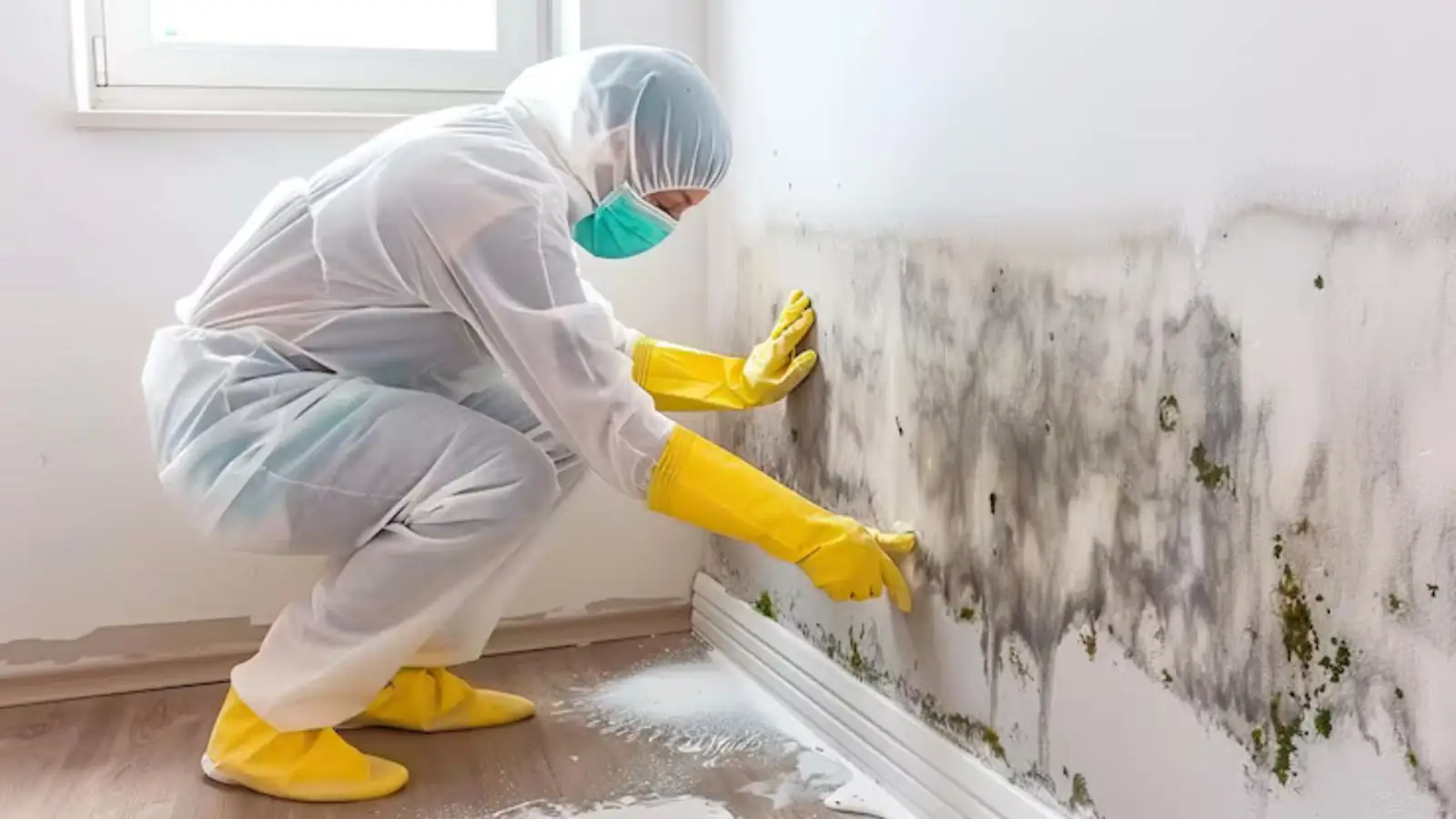
Mold remediation in Encinitas is the process of containing mold-affected areas, removing growth and damaged materials, cleaning the space and confirming that the work is finished. It follows the published ANSI/IICRC S520 standard for mold remediation, and you can ask any company whether its crews work to it.
Mold needs moisture, so the leak or humidity source has to be fixed for remediation to mean anything. We handle the cleanup side and work alongside your plumber, roofer or HVAC technician on the cause. Scope and price are explained before work starts.
Dark spots on a wall, a musty smell or a wet closet?
Most people do not start by searching for remediation. They notice a gray patch where a wall meets the ceiling in the shower, a closet that smells stale, or a corner that stays damp after a pipe was fixed. Those are the symptoms that usually lead to this page.
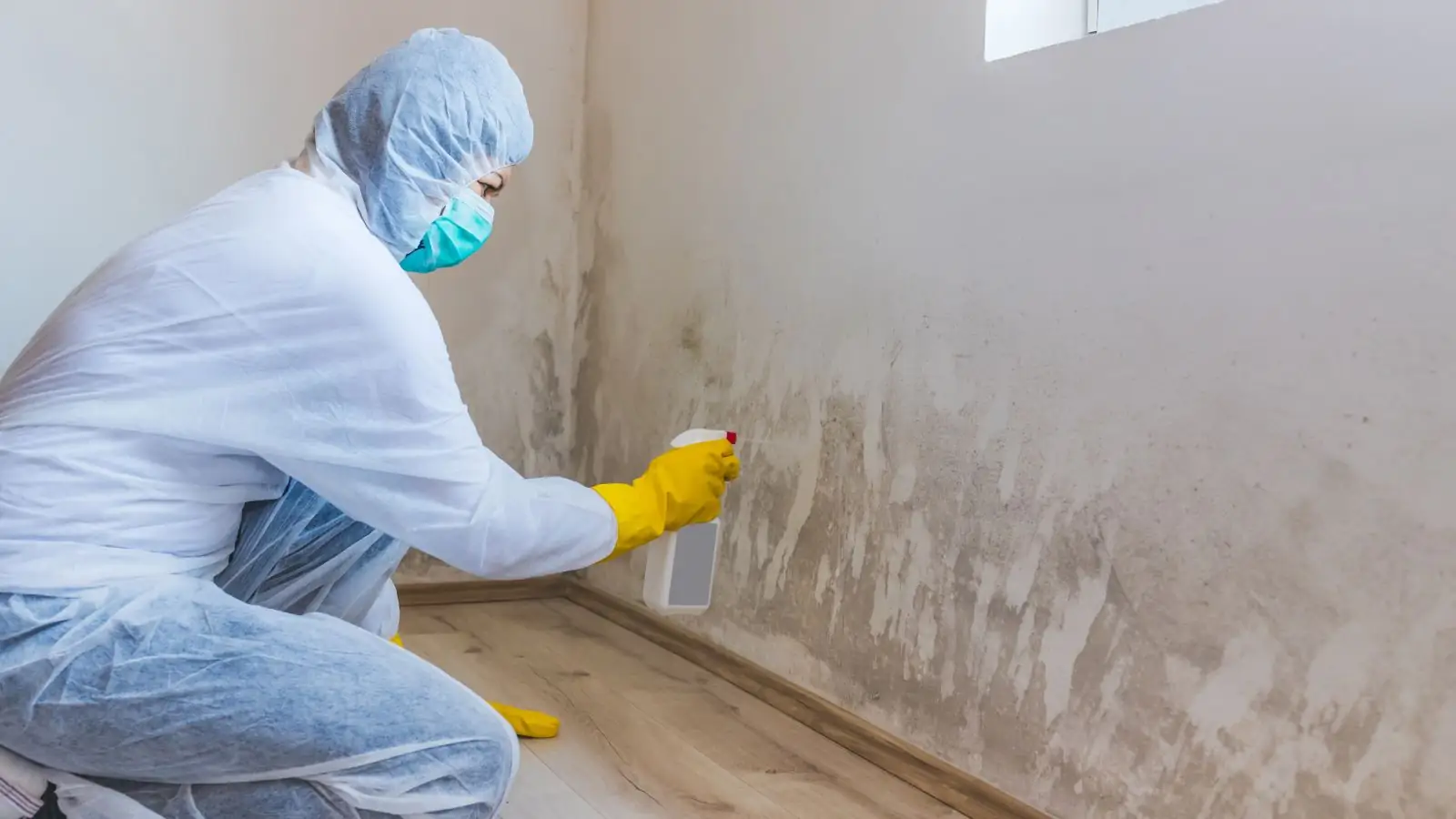
What comes next has a trade name. A mold inspection finds the extent of the growth and the moisture behind it, and remediation is the contained removal and cleanup that follows.
Found a spot and not sure what it is? Describe it to dispatch and we will explain what an inspection looks at.
☎ (760) 769-1159How mold remediation works
- Find the moistureA moisture meter and a thermal imaging camera show where walls and floors are still wet. If the source is active, it is stopped first.
- Contain the areaPlastic barriers and negative air pressure keep spores from drifting into the rest of the house during removal.
- Remove growth and damaged materialsPorous materials with growth, like drywall and carpet pad, are cut out and bagged. Solid surfaces are cleaned with HEPA vacuums and wiped down.
- Filter and dryHEPA air scrubbers clean the air while air movers and dehumidifiers dry the structure. See water mitigation for how drying is monitored.
- VerifyWe check moisture readings and, where it makes sense, recommend an independent party to confirm the area is ready to rebuild.
Mold Testing and Inspection
An inspection is a visit, a set of readings and a conversation. We look at the visible growth, check how far moisture has traveled behind surfaces and talk through what you have seen. You do not need to have a diagnosis in hand, and you can simply ask us to look.
Air or surface sampling is a separate question. Testing can show whether a particular space has higher spore counts or what kind of mold is present, but it does not replace finding the moisture. If you want testing, an independent tester with no stake in the cleanup usually gives the most useful result.
Callers often ask how much notice we need for an inspection. Call and ask, because same-day response is offered when available, but we do not promise a specific arrival time. If a leak is still active, say so and we will treat it as the higher priority.
Mold Removal and Black Mold Cleanup
Black mold is a common name for dark growth, and you cannot tell what a patch is by color alone. We do not diagnose or label a patch from a photograph, and health questions belong to a physician. What we can do is remove the growth, the damaged material beneath it and anything the moisture has spoiled.
Small, surface-level spots on a hard, sealed surface are sometimes cleaned directly. Anything on drywall, insulation, carpet or wood framing usually means removal, because porous materials hold growth beneath the surface. Painting over it or spraying bleach on it does not remove the cause, and the stain often returns.
Large areas, growth inside wall cavities and any job where the HVAC system may have spread spores call for containment and a written scope. We lay out what comes out, what is cleaned and what stays so you can compare before approving.
Mold After Water Damage
Wet building materials can start growing mold in a short time when they are not dried. That is why the first 24 to 72 hours of a water loss matter so much, and why water mitigation is usually the cheaper path when it is started early.
If a loss was not dried quickly, or an older leak is found during a remodel, mold can already be present. Pulling up a corner of carpet and finding spots, or opening a wall and seeing discoloration, are typical moments people call us. The plan then combines cleanup, removal and drying, and may include water damage cleanup for any wet debris left behind.
After removal, the rebuild is its own phase. Our water damage repair page explains what is replaced and in what order.
Leaks in closets, bathrooms and under sinks
Most mold jobs trace back to a specific, ordinary leak. A condensation line from an air conditioner that backs up into a closet. A toilet supply line that dripped through a ceiling below. A slow roof or siding leak behind a wall. A small drip under a bathroom sink that went unnoticed for weeks.
Each one calls for a different fix at the source and a slightly different cleanup. A wet closet often needs baseboards and the bottom of the drywall removed, while a bathroom ceiling may only need a section cut out and a vent checked. Furniture pushed against an exterior wall can hide growth in a corner for a long time.
| Where it started | What we check | Typical cleanup |
|---|---|---|
| AC condensate line in a closet | Wall base, carpet and pad, line routing | Remove wet carpet and bottom drywall, dry, clean |
| Upstairs toilet or tub leak | Ceiling below, insulation, framing | Cut out affected ceiling, dry framing, clean |
| Under-sink drip | Cabinet floor, wall behind, flooring edge | Remove cabinet base, affected drywall, dry and clean |
| Roof or siding leak | Wall cavity, attic insulation, sheathing | Open wall, remove wet insulation, dry and clean |
| Shower corner | Wall to ceiling joint, exhaust fan, caulk | Remove damaged drywall and clean framing |
Mold, a home sale and a loan
Real estate pressure is a common reason for calls. A buyer's lender or inspector may ask that visible mold be removed before closing. We cannot promise what any lender will accept, but the usual path is remediation followed by a written result from an independent party.
If you are selling or buying, ask the other side early what documentation is needed and keep records of the work. Bring the inspection report and your moisture readings to the conversation. That record answers most questions.
What we will and will not do
We remove mold growth and mold-damaged materials, clean the space, set up containment and filtration, and dry the structure. We explain each step and the reason for it before it happens, so nothing arrives as a surprise on the invoice.
We do not diagnose health conditions, fix the plumbing, roof or HVAC problem that fed the mold, or promise that mold will never return anywhere in the home. No company can promise that, because mold only needs moisture and a surface. What we can do is make sure the area is clean and dry when we leave, and tell you plainly which conditions to watch.
Floodwater and sewage jobs are a different category of work with different safety steps, and our flood damage restoration page explains how those are handled.
Remediation options and honest trade-offs
Clean in place
Fast and inexpensive for small spots on hard surfaces. It does not work for growth in porous materials.
Remove and replace
The usual route for drywall, pad and insulation with growth. It costs more and adds a rebuild step.
Containment job
Larger areas get barriers, negative air and HEPA filtration. It takes more time and care and prevents spread.
Do nothing and monitor
Reasonable only if the area is truly dry, the source is fixed and growth is minimal. Check again after rain and humid weeks.
Insurance and mold
Whether mold is covered often depends on what caused the moisture. A sudden and accidental event, like a burst pipe, may be covered, and a long-term leak or neglect often is not. Policies also vary on mold limits, so read your policy or ask your insurer. We document the area and our findings, but we do not promise a claim will be approved.
What drives the cost of mold remediation
- Affected area. The square footage of growth and of moisture-damaged material around it.
- Materials involved. Drywall, carpet, insulation, wood framing and tile each need different handling.
- Containment level. Barriers, negative air and HEPA filtration add equipment and time.
- Drying days and equipment. Wet structure needs drying before it can be closed up.
- Rebuild scope. Replacing removed materials is priced separately from the removal.
Want your real number? Call (760) 769-1159 and tell us where the growth is and where water has been.
Encinitas local note
The coast gets roughly 10 inches of rain a year, and the National Weather Service says about 85 percent of it falls from November through March. If you have had a wet winter, check ceilings below the roof, window corners and closets on exterior walls before spring.
Check any contractor before work begins. The California Contractors State License Board requires a license for projects of $500 or more in combined labor and materials, caps a down payment at 10 percent or $1,000 whichever is less, and lets you verify a license at cslb.ca.gov or 800-321-CSLB. Also ask whether your state licenses mold work.
If remediation opens walls, ask the City of Encinitas Building Division at 760-633-2730 whether your rebuild needs a permit. Homeowners inland can read about our reach on the San Marcos page, which covers the Encinitas Boulevard and Highway 78 corridor.
Frequently Asked Questions
Dark spots on a bathroom ceiling usually mean moisture has been sitting there, from steam, a slow leak or a poorly vented fan. We cannot say what a spot is without looking, and health questions belong to a physician. Fix the moisture source first, then ask for an inspection so the affected material can be cleaned or removed.
No specific notice is required. Call and describe the situation, and same-day response is offered when available. We do not promise an arrival time, and a leak that is still active gets the higher priority.
Yes. An inspection is a visit where we look at the area, take moisture readings and explain what we see and what the options are. You do not need to commit to work to ask us to look.
It depends on who is asking. A lender or buyer may ask for removal and a written result from an independent party, but we cannot promise what any lender will accept. Ask the other side what they need before the work starts.
Bleach on a porous surface does not reach growth below the top layer, and it does nothing about the moisture. The usual approach is removal of affected porous materials and cleaning of what stays.
Independent clearance testing is normally done by a separate third party so the tester has no stake in the cleanup. We can tell you when it makes sense and what the tester will want to see, such as dry readings and a finished removal area.
It depends on the area, containment and drying time. Small areas can be done in a day or two, while larger jobs take longer, and we explain the schedule and the price before work starts.