
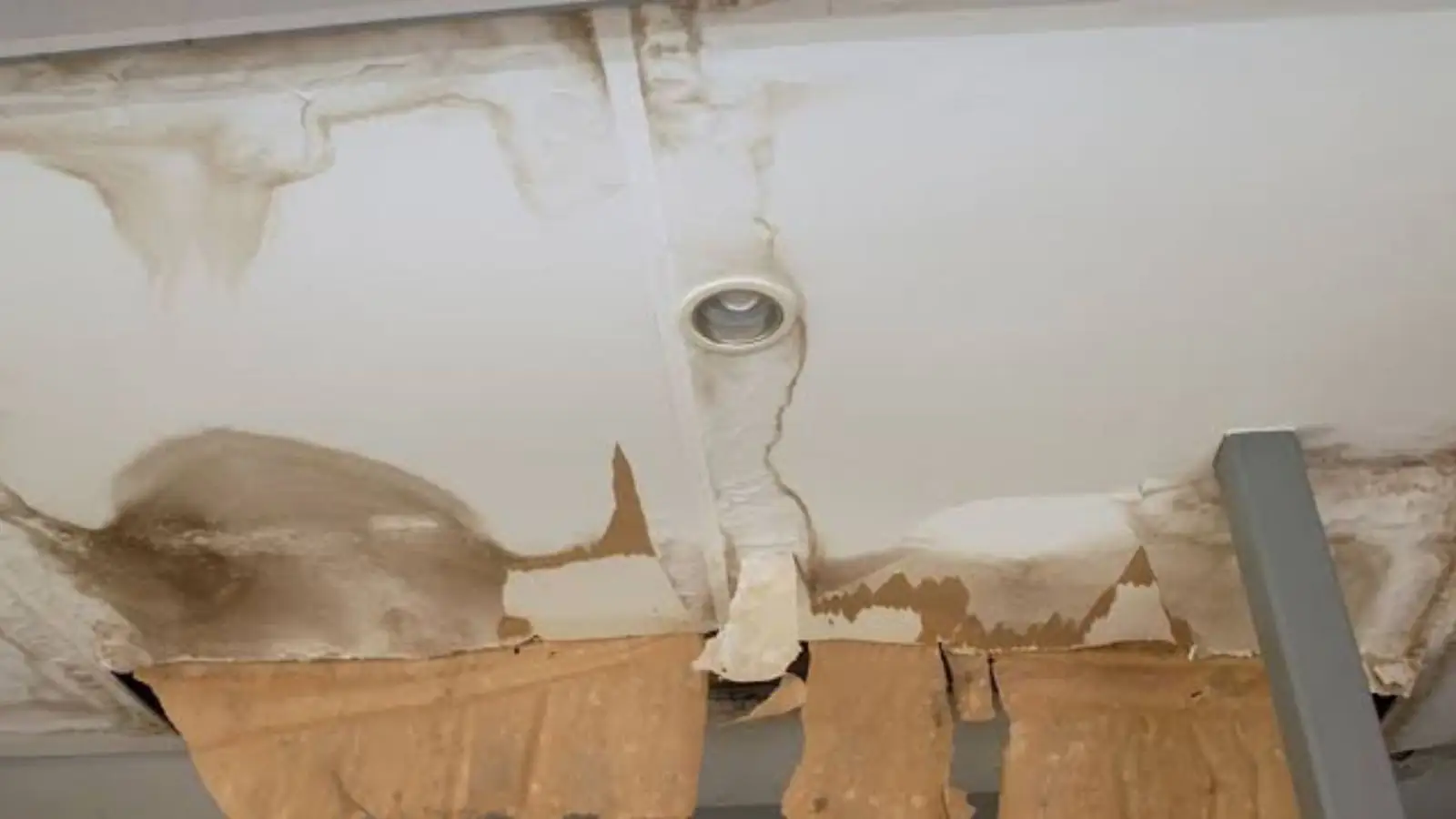
The first hour with a wet ceiling
You look up and the paint is bubbling, or a steady drip has started over the couch. The next sixty minutes matter more than the next sixty hours, because wet drywall softens, insulation soaks and electrical fixtures can fill with water.
- Protect people firstKeep everyone out from under a bulging or sagging section. Drywall holding water can fall without warning.
- Stop the source if you canIf a bathroom or laundry sits above, shut off its supply valve or the main water valve. If the source is the roof, move to the next step.
- Deal with electricityIf water is near a light fixture, fan or outlet, do not touch it. Cut the circuit for that area only if the panel is dry and reachable, and treat any electrical or gas concern as a 911 or utility call.
- Catch what is fallingUse a bucket or tarp and move furniture, rugs and electronics aside.
- Photograph everythingTake wide and close photos of the ceiling, the floor below and any wet belongings before you start moving things.
If a small, low bulge is holding a lot of water and nothing electrical is nearby, some people puncture its lowest point with a screwdriver over a bucket to let it drain in a controlled way. Skip that step if you cannot do it from a safe distance, or if you are unsure what is above the drywall.
Stain, sag or drip: what each one is telling you
A brown ring with a crisp edge
Water reached the ceiling at some point and dried, or is still arriving slowly. Mark the edge with a pencil and date it, then check whether it grows.
A sag or bulge
Drywall or plaster has absorbed enough water to lose strength. This is urgent because it can fail and because the cavity above is holding water.
A steady drip
Water is moving freely through the cavity. Locate the source quickly and expect wet insulation and framing above the drip point.
Peeling or bubbling paint
Moisture is behind the paint film. The ceiling may feel dry to the touch while the board above it is still wet.
Water coming through a ceiling right now? Our dispatch line is open all night and we can talk you through the safe steps while you wait.
☎ (760) 769-1159Where the water came from
The source decides the repair, so find it before you plan anything. With a second floor above, the usual suspects are a toilet or tub supply, a drain line, a washing machine hose or a dishwasher. On a single story or top floor, think roof, flashing, a plumbing vent or an attic air handler.
Timing gives hints. A ceiling that leaks only during or after rain points to the roof or an exterior wall. One that leaks only when a fixture runs points to plumbing. A steady, quiet leak that never stops can be a supply line under pressure, and shutting off the main valve is the quickest test.
With safe attic access, look for wet insulation, a dark trail on rafters, or a damp spot under a pipe or duct. A flashlight and a phone camera tell you more than a guess from below, and the photos help whoever repairs the roof or plumbing.
Condensation from an attic air handler or a poorly insulated duct can also drip steadily into a ceiling, and it often escapes notice until the stain is large. If the water has an oily or musty smell, mention it on the call.
What gets dried, what gets cut out
Small, recent stains on solid drywall can sometimes be dried in place with air movers and dehumidifiers, then primed and painted. Sagging board, heavily wet insulation, or anything wet for several days usually comes out, because it will not hold its strength and stays damp inside.
| Condition | Typical outcome | Why |
|---|---|---|
| Light stain, board still firm | Dry in place and seal | Board kept its strength and drying is practical |
| Bulge or sag | Cut out and replace the section | Water-softened board does not recover |
| Wet insulation above | Remove and replace | Compressed wet insulation stays damp and loses value |
| Plaster ceiling | Case by case after moisture readings | Plaster and lath hold water differently |
The extraction and drying stage is what our emergency water removal team handles, and the rebuild that follows, with board, texture and paint, is covered on our water damage repair page. Doing the first stage well keeps the second stage small.
Document it before you tidy up
Insurance conversations go better with records. Take dated photos and short videos, write down when you noticed the leak, and keep any plumber or roofer receipts. Save the damaged materials or photograph them before disposal if your insurer asks to see them.
Check your policy for how it treats sudden and accidental water versus gradual leaks, and get your insurer's answer before you agree to a repair plan. Neighbors in Carlsbad and Rancho Santa Fe with larger homes often have multiple levels above a ceiling, so a clear timeline of which fixture was used helps narrow the source.
Where the standards come in
Published standards guide this kind of work. ANSI/IICRC S500 covers professional water damage restoration, and the same body's S520 covers mold remediation. We cite them as the industry references, and we do not claim a certification beyond what we can show you on paper.
Encinitas note: ceilings and the winter rains
The city's own hazard mitigation plan records that heavy rain in 2005 flooded and closed the intersection of El Camino Real and Leucadia Boulevard. Storms of that size are the reminder to check roof flashing and gutters before the wet season starts.
San Diego's Lindbergh Field gauge shows about 85 percent of annual rain arriving from November through March. If a stain appears only after a storm, inspect the roof and exterior walls first, then call a roofer and photograph the ceiling before and after the next rain.
Frequently Asked Questions
Drywall begins to soften and insulation begins to hold water almost immediately, and growth can follow if materials stay wet for days. There is no safe waiting period, so stop the source and arrange drying as soon as it is safe to do so.
Only when you can do it from a safe distance, nothing electrical is in the wet area, and the panel is off or the circuit isolated. Use a bucket and open the lowest point. If you are unsure, stay out from under it and call.
Sometimes. If the board is firm and tests dry, stain-blocking primer and paint can work. If the board is soft, bulging or has been wet for days, the section usually needs to be replaced.
Our dispatch line is answered 24 hours a day. Tell us what you see, and we will walk through safe first steps and arrange same-day response when available.
Most of the coast's rain falls between November and March, and roof or flashing leaks tend to show up then. A ceiling that stains only after storms points to the roof, not plumbing.