
Before you pick up the phone to your insurer
Most claims go wrong at the start, not the end. People either rush to throw things away or wait days hoping the damage will dry on its own. A better opening is short and orderly: stop the water, make the property safe and start recording.
Read your policy declaration page and note your deductible, because it shapes your decisions. Then call your insurer or agent to report the loss, ask what they require and write down the claim number and the name of the person you spoke to.
Do not promise yourself an outcome. Coverage decisions belong to your insurer, and nothing a restoration company or anyone else says can substitute for your policy language.
Sudden or gradual: the line adjusters draw
In general, sudden and accidental water damage, such as a burst supply line or a failed water heater, is often covered. Damage that builds slowly from a long-term drip, neglected maintenance or seepage is often not. Flood damage is usually excluded and needs separate flood coverage.
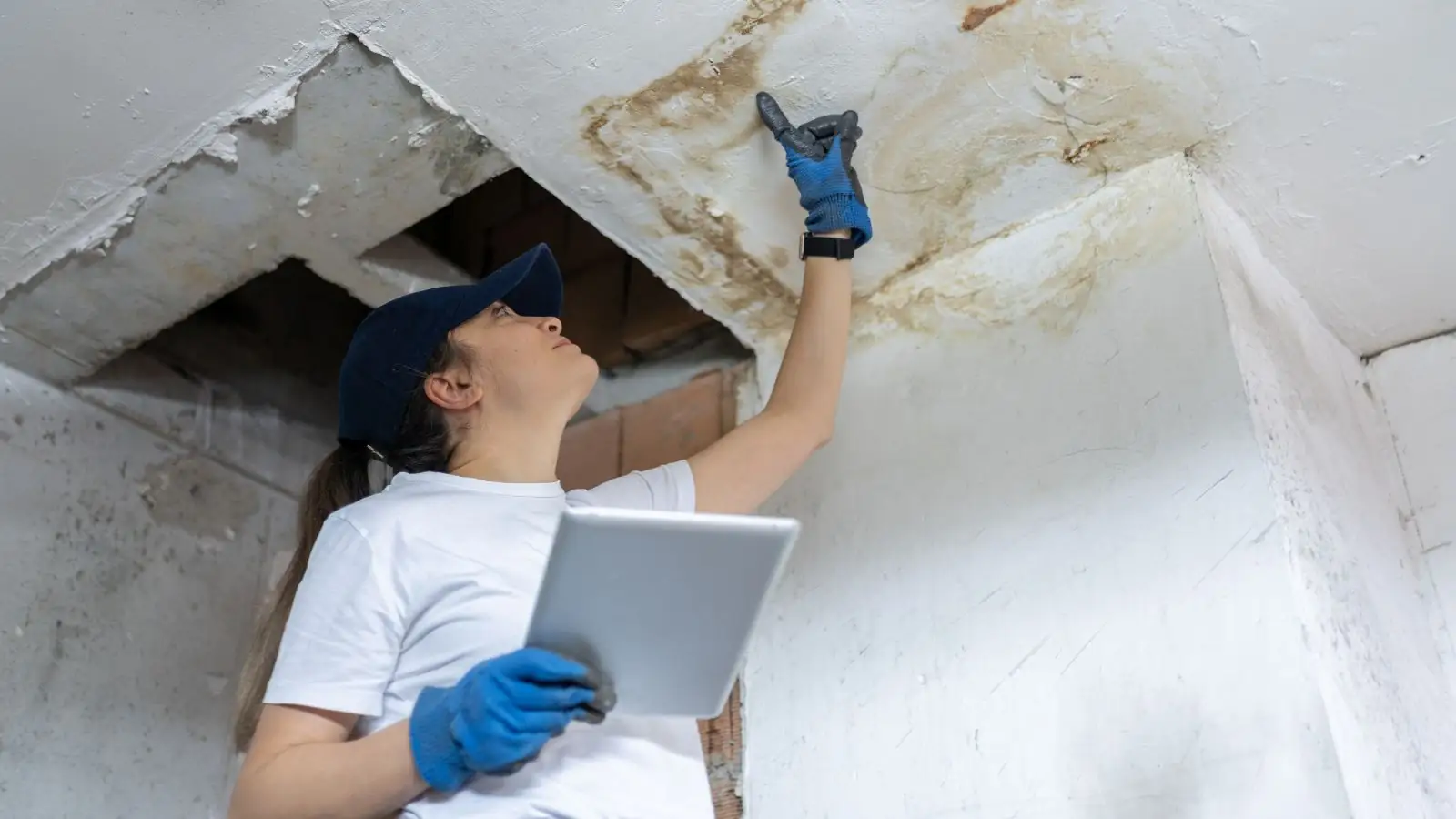
That distinction makes timing evidence valuable. Photos of a stained ceiling that grew after a certain date, a plumber's invoice naming a failed fitting, or a water bill showing a spike all help describe what happened and when.
The same facts help in neighborhoods from Del Mar to inland estates, because the sudden-versus-gradual question does not change with the address. Check your policy and ask your insurer how they treat your specific loss.
Mid-claim and water is still a problem? Our dispatch line answers around the clock and we can start drying and documenting today.
☎ (760) 769-1159What to photograph and record
- Wide shots of each affected room and close-ups of stained or swollen materials.
- The source of the water, such as a broken fitting, a failed appliance hose or a roof opening.
- Wet belongings before they move, including labels and serial numbers on electronics.
- Moisture meter readings or thermal images if a professional took them.
- A running list of damaged items with approximate age and value.
Video helps when you narrate what you see. Keep originals on your phone and back them up the same day, since hardware fails at the worst moments.
Mitigation is your job even before approval
Most policies ask for reasonable steps to limit the loss, which usually means stopping the source, removing standing water and starting drying. Those reasonable steps do not need to wait for an adjuster in many cases, and keeping receipts for them is wise.
That is where emergency water removal fits into a claim. Extraction and drying equipment start the clock on recovery, and the written scope and moisture readings that come with the work document what was wet and for how long.
Keep damaged materials until told otherwise
Adjusters sometimes want to see removed carpet, pad or drywall. Photograph it, label it and ask your insurer before discarding it, unless it is contaminated and unsafe to keep.
Keep a simple claim log
A claim can stretch over weeks and involve several people, so memory is a poor record keeper. A single note on your phone or a paper folder works if you keep it current.
- Date and time every callWrite who you spoke to, what they said and any deadline they mentioned.
- Save every email and textScreenshots are fine. Keep the thread in one folder.
- Track spendingLog receipts for extraction, drying, meals, lodging and temporary repairs with the date paid.
- Note every visitRecord when an adjuster, plumber or contractor came, and what they looked at.
When a question comes up later about what was wet and for how long, a tidy log answers it in a minute. Without one, the same answer can take days of searching through messages.
Working with a restoration company during a claim
A restoration company works for you, not for the insurer. We explain scope and price before work starts, and we document the job in writing. We cannot promise that a claim is approved or what it pays. The scrubbing, sanitizing and debris removal that follow extraction fall under our water damage cleanup work.
| Task | Who usually handles it |
|---|---|
| Reporting the loss and getting a claim number | You and your insurer |
| Stopping the source, extraction and drying | You and your restoration company |
| Moisture readings and a written scope of work | Restoration company |
| Coverage decision and payment amount | Your insurer |
| Rebuild and finish work | A licensed contractor you choose |
Neighbors in Rancho Santa Fe with larger properties often have several rooms and floors affected, which makes a written room-by-room scope especially helpful when an adjuster visits.
When the damage came from a storm
Storm water follows its own rules. Flood claims under the National Flood Insurance Program can be reported at 1-800-638-6620 according to the state insurance department, which also notes the California FAIR Plan does not cover storm-related damage unless you hold a supplemental difference-in-conditions policy from another insurer.
If wind-driven rain came through a roof or window, your homeowners policy may respond differently from rising water. Describe the water path in your report so your insurer can decide which coverage applies.
Encinitas note: choosing the rebuild contractor
A contractor license is required for any project of $500 or more, labor and materials combined, according to the state licensing board. After mitigation ends, a rebuild that includes drywall, flooring and paint will usually pass that threshold.
The board's guidance on deposits is 10 percent or $1,000, whichever is lower, and it recommends checking the license at cslb.ca.gov or on 800-321-CSLB (2752). Ask your insurer whether they have any requirements for who performs repairs, and keep your estimate and contract in your claim file.
Frequently Asked Questions
Policies set their own time limits, and some require prompt notice of a loss. Read your policy and call your insurer as soon as you can. State-specific deadlines should be confirmed with the California Department of Insurance.
Many policies want the loss contained, which often includes extraction and drying. Ask your insurer when you report the loss, take photos first and keep your receipts.
Not until you have photographed them and asked your insurer. Keep a list with approximate age and value, and keep samples of heavily damaged materials if the insurer wants to see them. Anything contaminated by sewage should be handled safely and not kept.
We document the work and can share records with you and your insurer. Coverage decisions and payment amounts belong to your insurer, and we cannot promise how a claim will be handled.
Flood is usually excluded from standard homeowners policies, and flood coverage is a separate federal program. Ask your insurer what applies, and report any NFIP claim at 1-800-638-6620.