
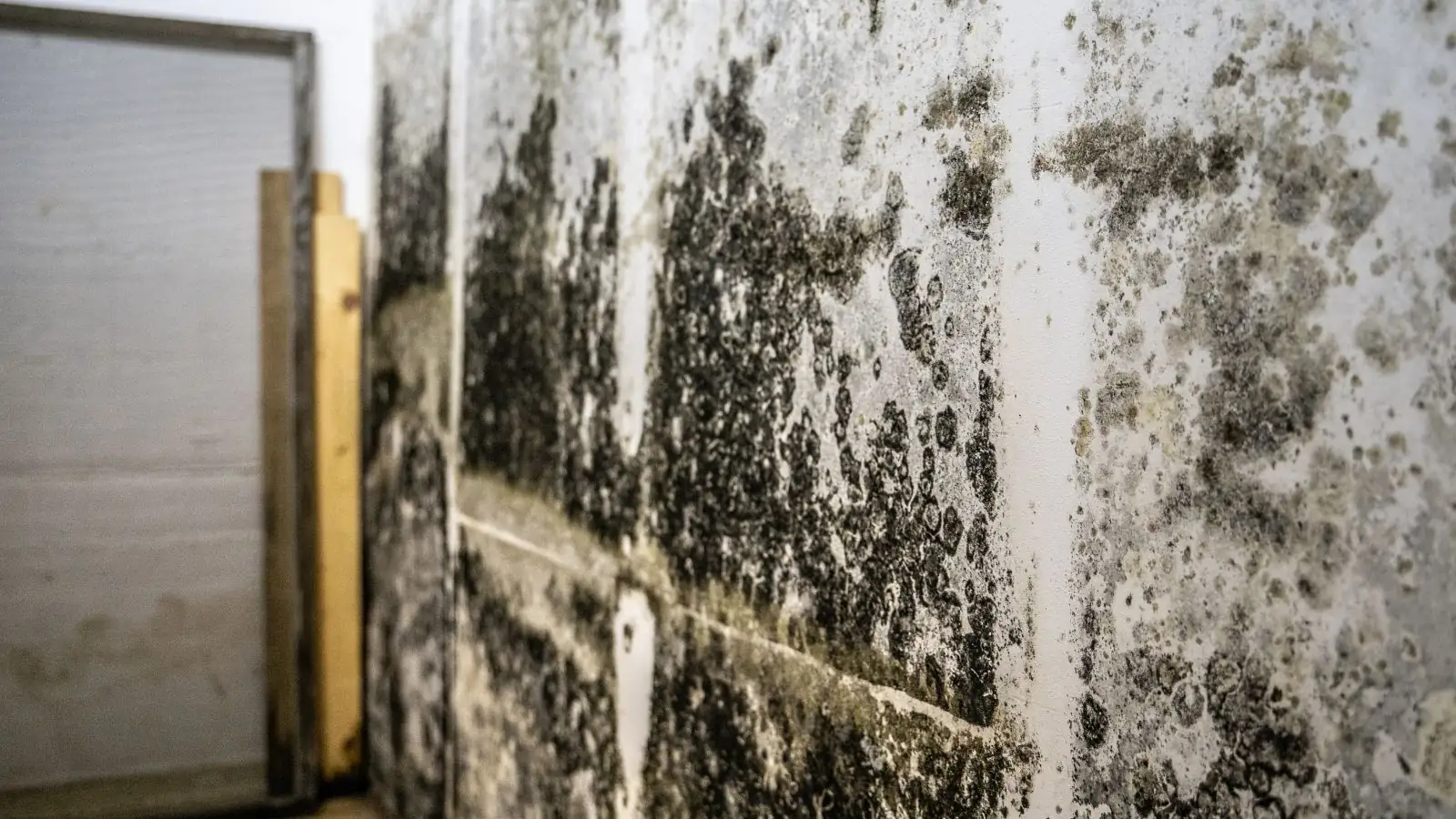
Three kinds of wall, three kinds of answer
Walls in a lower level or garage-level room tend to be one of three things: poured concrete or block, drywall over studs, or exposed wood framing. Each one takes up moisture differently, so each one has a different answer when growth appears.
Concrete and block
Hard and mineral, so surface growth can be cleaned. The wall can still pass moisture through from outside, which needs its own fix.
Drywall
Paper-faced gypsum that soaks up water. Growth tends to go through the paper, and affected board is usually cut out.
Wood framing
Solid lumber can often be cleaned and dried in place, as long as it is still structurally sound.
Insulation inside the wall
Fiberglass or foam batts hold moisture against framing. Wet insulation is normally removed and replaced.
Before any of that, make sure the white crust you see is actually mold. The two get confused all the time on concrete.
Safety steps before you start
Before you clean anything, set up the space so you are not breathing or spreading what you disturb.
- Wear an N95 or better respirator, gloves and eye protection before touching affected material.
- Keep children, pets and anyone with breathing concerns out of the area.
- Do not dry-brush or sweep growth, since that spreads spores through the room.
- Do not mix bleach with ammonia or other cleaners.
- Stop and call a professional if growth covers a large area, returns after cleaning, or sits inside walls.
Looking at growth on a lower wall and not sure what the surface can handle? Tell dispatch what the wall is made of and where it is damp.
☎ (760) 769-1159Efflorescence or mold: how to tell in plain words
Efflorescence is a powdery mineral deposit left behind when water moves through concrete or masonry and evaporates at the surface. It is not growth, but it is a warning that water is moving through the wall.
| Check | Efflorescence | Mold |
|---|---|---|
| Texture | Dry, crystalline or powdery | Fuzzy, slimy or speckled |
| Color | White or pale gray | Black, green, brown or white patches |
| Water test | Dissolves when sprayed with water | Smears or stays |
| Smell | Little or none | Musty or earthy |
| What it means | Water is moving through the wall | Moisture is feeding growth |
Either one points back to moisture, which is why a wall with efflorescence deserves attention even when no mold is present.
Concrete and block walls
Surface growth on sealed or painted concrete can usually be cleaned with a detergent, scrubbing and HEPA vacuuming, then dried. Raw, unpainted block is more porous and may need more passes, or a professional method to reach growth in the pores.
What cleaning cannot fix is the water source. If moisture is moving through the wall because of drainage, a high water table or a leaking pipe, growth returns until that cause is addressed. Waterproofing is a separate trade from restoration, and a company that does mold work will tell you that honestly.
Drywall: why it usually comes out
Drywall has a paper face and a gypsum core, and both soak up water. Once growth reaches the paper, wiping the surface only clears the part you can see. Standard practice is to cut out the affected section, typically a bit beyond the visible edge.
A moisture meter shows how far water traveled behind the paint. Cuts are made where readings drop, and the cavity behind is inspected and dried before anything new goes up. Skipping that inspection is how a small patch becomes a larger one.
Do not demolish a large area dry
Breaking out drywall without containment sends dust and spores into the rest of the house. For anything beyond a small patch, plan for plastic barriers and a HEPA-filtered vacuum or air scrubber. Stay away from wet outlets, and put any electrical or gas worry ahead of everything else by calling 911 or the utility.
Wood framing and what is salvageable
Studs and plates are the part of a wall most likely to survive. Surface growth on sound wood can be cleaned by sanding, wire brushing and HEPA vacuuming under containment, then dried and checked. Framing with rot, soft spots or deep penetration is a structural question for a contractor.
Before closing a cleaned wall, the framing should read dry on a moisture meter and the cavity should have had time to air out. Rushing the close-up is a common reason walls need a second visit, because trapped moisture feeds new growth behind fresh paint.
Antimicrobial treatments are sometimes applied after cleaning, but they do not replace removal and drying. The measure of success is a dry wall assembly and a clean surface, not a product that was sprayed.
Containment and clearance basics
The published industry reference is ANSI/IICRC S520, the standard for mold remediation. It describes containing the work area, controlling air pressure and cleaning methods, and a contractor should be able to say whether the crew works to it.
- Set up containmentPlastic sheeting seals the work area and a negative-pressure setup keeps air flowing toward the filter.
- Remove what cannot be cleanedDamaged drywall, insulation and trim are bagged in place and removed.
- Clean what staysFraming and hard surfaces are cleaned and HEPA vacuumed.
- Dry and verifyMoisture readings confirm the wall assembly is dry before it is closed.
- Consider clearance testingAn independent tester can check the result, which some lenders and buyers ask for.
Our mold remediation team can explain how containment and clearance fit the size of your job. If the wall got wet because water entered during a storm or from the ground, the flood damage restoration process covers drying the structure first. Neighbors in Solana Beach and Rancho Santa Fe ask the same questions about what a wall will tolerate.
Encinitas note: creeks and wall moisture
Encinitas' hazard mitigation plan names Escondido, Encinitas and Cottonwood Creeks among the flood-prone areas in the city. A lower wall near one of those creek corridors can see water pressure from the ground after heavy rain.
If you live near a creek, note whether staining appears after storms and which side of the room it shows on. That detail helps a contractor decide whether drainage, a leak or grading is the cause, and it keeps you from repainting a wall that is still taking in water.
Frequently Asked Questions
Surface growth on concrete can usually be cleaned and dried. The wall may keep taking in moisture from outside, so fix the source or the growth is likely to reappear.
The paper face and gypsum core absorb water, so growth often reaches below the paint. Cutting out the affected section is the reliable way to remove it.
A moisture meter reading in line with a dry reference area of the same material is the usual test, repeated over a few days. Feeling dry to the touch is not enough, because moisture can stay inside the cavity.
It may be efflorescence, a mineral deposit from water moving through the wall. A quick spray test helps, because efflorescence dissolves in water and mold generally does not.
They can. The city's hazard plan lists Escondido, Encinitas and Cottonwood Creeks as flood-prone, so homes near them should watch for dampness after heavy rain.