
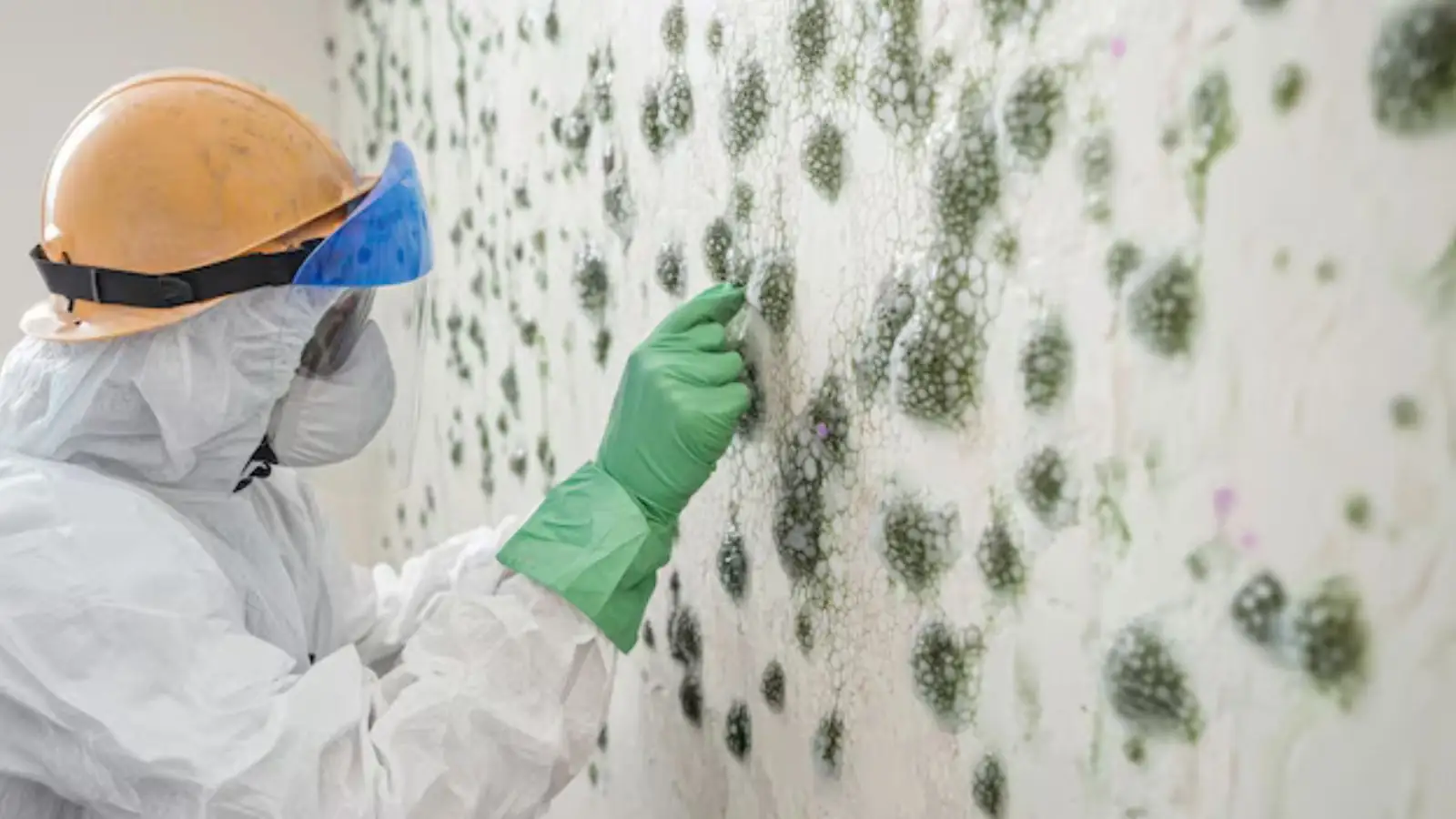
Reading the pattern before you clean
Stand a few feet back from the wall and look at the shape, not the spots. A neat circle, a ragged band along the floor and a scatter of dots in a corner each describe a different water story.
| Pattern | What it often suggests | First thing to check |
|---|---|---|
| Round patch with a tidy edge | A single leak from above or behind, such as a supply line or roof drip. | Test the wall above and open the ceiling or cabinet nearby. |
| Band along the baseboard | Water arriving at floor level from a drain, a spray or a past flood. | Look outside for grade and splash, and check the nearest drain. |
| Dots in an upper corner | Condensation where cool surfaces meet damp indoor air. | Check airflow, insulation and the temperature of that corner. |
| Streaks below a window | A leaking sill, flashing or frame. | Probe the sill and the wall under it for softness. |
| Patch behind furniture | Trapped air with no circulation next to a cool wall. | Pull the piece out and look at the back of the wall and the furniture. |
The pattern is a hypothesis, not a verdict. Moisture readings confirm it, and they should come before any cleaning or paint.
Behind furniture and in the corners
Furniture pushed flat against an exterior wall blocks the air that normally keeps that surface dry. Warm indoor air carries moisture, and where it meets a cooler wall surface it condenses in small amounts, day after day.
Corners are worse because two exterior walls meet and the surface runs cooler. A closet packed with clothes, a bed with the headboard against the wall or a bookcase that has not moved in years are all common hiding places.
Leave a few inches of air between furniture and exterior walls, open interior doors so air can move, and run bathroom and kitchen fans while you use them. These habits do not solve a leak, but they take away the easy moisture.
Spots on a wall and no obvious leak nearby? Call dispatch, tell us where they sit and what the room is used for, and we will explain what we would check.
☎ (760) 769-1159Paint, wallpaper and window sills
Paint can hide a stain for a season and then bubble. Wallpaper is more telling, because moisture tends to loosen the seams and lift the edges before any color appears on the surface.
Window sills are small collection points. Rain can enter around the frame, and indoor condensation can run down the glass and sit in the track or against the casing. If the wall under a window feels cool, damp or soft, probe it gently with a screwdriver tip and look at the caulk line outside.
Painting over an active problem is the quickest way to make it larger. A sealing primer and fresh paint trap what is behind them, and the stain returns.
When the source is a drain or a sewer line
Sometimes a wall problem comes from a pipe, not from the weather. A leaking drain line inside a wall can leave a damp band that looks like condensation but keeps growing even in dry weeks.
If the wall is near a toilet, a tub or a laundry drain and the area smells foul, treat it as a contaminated-water situation. Stay out of the area, keep children and pets away and call a plumber or restoration provider to find the leak. Do not use the fixture until the line is checked.
Sewage and electrical caution
If you see sewage or the wet area is near outlets or a panel, stay out. Only touch the breaker if the panel is dry and easy to reach. If there is any shock or fire danger, 911 or the utility comes before us.
What to do now
- Find out whether it is still wetPress a hand on the wall and compare it with a nearby dry section. A moisture meter gives a number.
- Fix or stop the sourceSeal the sill, repair the line, improve airflow or clear the drain, depending on what you found.
- Do not paint or scrub yetWait until readings come down, or the problem will return.
- DocumentTake photos before and after any change and note when you first saw the spots.
- Get an assessmentAsk for a written scope that covers removal, drying and rebuild.
Fixing the wall and the cause
Growth in drywall or on its paper face usually means the board comes out, because cleaning cannot reach the inside of the panel. That job, with containment and filtered air, is the heart of mold remediation.
Once the area is cleared and dry, the wall is rebuilt with new board, texture and paint, and water damage repair covers that stage. Ask any contractor to describe both stages on paper so you know where one ends and the other begins.
People in Del Mar and San Marcos ask about the same patterns we see in Encinitas. We tell all of them the same thing: read the pattern, check the moisture and fix the cause before the cosmetics.
Where the standards come in
For mold work the published reference is ANSI/IICRC S520. It describes containment, removal and verification, and it is the document a careful contractor works from.
Encinitas note: rain season and who owns the sewer line
Most of the area's rain arrives between November and March, about 85 percent of it per the NWS climate table for the Lindbergh Field gauge in San Diego, with a shoreline average near 10 inches a year. If new spots appear on an exterior wall in winter, suspect a leak at a window, a roof edge or a wall seam first, and look outside during the next rain.
If the source turns out to be a sewer problem, ownership matters. If sewage comes up inside the house, start with the pipe that links it to the street main. The city treats that private lateral as the owner's responsibility, cleanup of the overflow included. The city is accountable once sewage enters the main. A plumber can tell you which side of that line a failure sits on.
Frequently Asked Questions
Because the moisture source is still there. Cleaning removes what you see, but growth comes back when condensation, a leak or poor airflow keeps the wall damp. Fix the cause and confirm the wall is dry.
Painting over active growth traps it and rarely fixes it. The wall should be dry and the source stopped first, and growth in drywall usually means the affected board is removed.
It can contribute. Furniture blocks airflow, so a cool exterior wall stays damp, especially in corners. Leaving a gap and keeping air moving helps, but it will not fix a leak.
In Encinitas the property owner is responsible for the private lateral, the pipe from the building to the street main, including repair and overflow cleanup. The city is accountable once sewage enters the main.