
The first ten minutes: what to check
You open a closet door and the carpet squelches. Before anything else, work through a short list, because the answers decide what happens next.
- Look for a source that is still running, such as a dripping pipe, a sweating duct or a full condensate pan.
- Touch the wall behind the closet shelf and the baseboard at the bottom, and note whether either feels soft.
- Locate the air conditioner or air handler nearest the closet and look for water around it.
- Turn off the air conditioner if you can see water collecting under it, and leave it off until the line is cleared.
- Photograph everything before you move a box.
If any electrical equipment sits in or near the wet area, keep your hands off it. Cut power only from a dry panel you can reach without stepping in water. If anything sparks, hums or smells hot, call 911 or the utility first.
How a condensate line ends up wetting a closet
Cooling air pulls moisture out of the air, and that water collects in a pan under the coil. A small drain line carries it away, usually to the outdoors or a plumbing drain. When that line clogs, the pan overflows, and gravity sends the water to the nearest low spot.
A closet is often that low spot, especially when the air handler shares a wall with it. Water runs along framing, soaks the bottom plate and wicks into carpet and baseboards without ever dripping where you can see it.
Whether the house is a single-family home in Olivenhain or a coastal house in Leucadia, the closet works the same way. What matters for you is where your own air handler and drain line run, so find them before the next hot week and check that the line drains freely.
Found a wet spot and a musty smell in a closet? Call dispatch, describe the carpet and the wall, and we will walk you through safe next steps.
☎ (760) 769-1159What each wet material needs
| Material | What water does | What usually happens next |
|---|---|---|
| Carpet and pad | The pad holds water long after the carpet surface feels dry. | Pad is typically removed. Carpet may be dried or replaced depending on how long it stayed wet. |
| Baseboards and trim | Wood trim swells and can hold moisture against the wall. | Pulled, dried and reinstalled if sound, or replaced. |
| Drywall at the base | The bottom edge wicks water upward and can crumble. | Cut out above the wet line and dried before new board goes in. |
| Stored items | Cardboard, fabric and paper absorb moisture quickly. | Moved out, spread to dry and inspected before being returned. |
Moisture readings tell you which of these materials are truly dry. A technician can scan the baseboard, the wall at several heights and the subfloor under the carpet, then repeat the scan after drying to confirm the numbers came down. Guessing by touch usually misses the damp framing hiding behind a dry-looking surface.
When damp becomes a mold problem
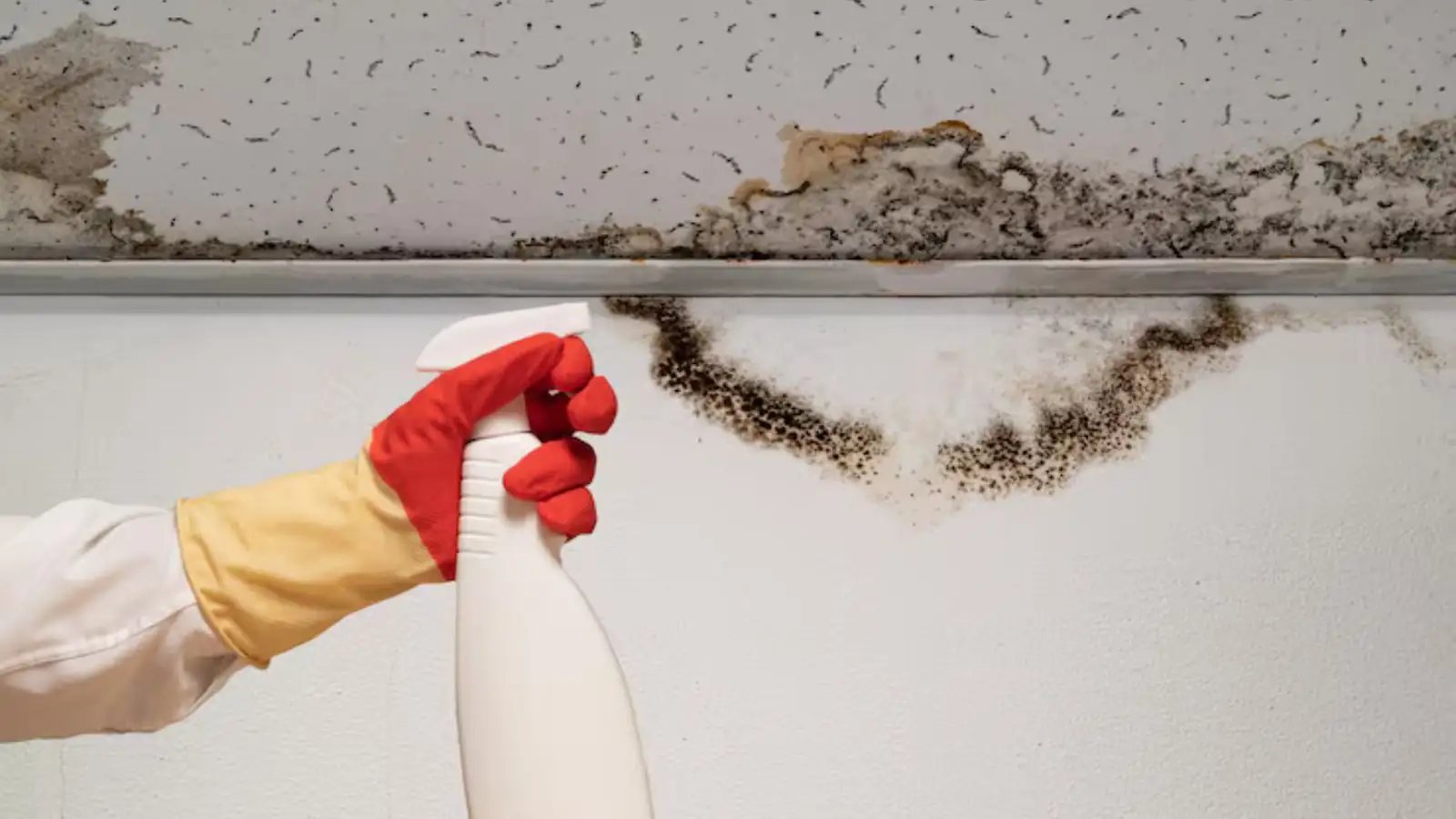
Mold needs moisture to grow, and a wet closet supplies it. If the damp patch has been there for more than a couple of days, you may see dark spots on the back of the baseboard, on the wall paper or under the carpet edge.
Pulling up a corner of carpet and finding a dark patch underneath is a common discovery. A visible color does not identify what is growing, and anyone with a health concern should ask a physician, so treat the spots as a moisture finding first.
Do not rub dry mold with a brush or blow air across it, because that spreads material through the house. Close the closet door, keep the air conditioner off if the leak is still active and call for an assessment instead.
Drying the closet and what remediation adds
The first job is to stop the source and get water out. That is the same logic as water mitigation, where extraction, moisture mapping and air movers go to work before anything is rebuilt.
If mold has already formed, the work changes. Remediation adds containment so spores do not travel, HEPA air filtration, careful removal of affected material and cleaning of surrounding surfaces. Industry practice here follows ANSI/IICRC S520, which describes how this work is planned, so ask any company whether its crews work to it.
After removal, many homeowners ask for clearance testing to confirm the area is clean. That is a good question to put to any provider, and mold remediation is the service that covers containment, removal and that follow-up.
Homeowners in Rancho Santa Fe and Del Mar call about the same closet leaks. The advice stays the same wherever you live: stop the source, dry it fast and photograph before you touch.
Keeping the drain line clear next time
- Have the condensate line flushed on your maintenance visits.
- Ask whether your system has a safety switch that shuts it off when the pan fills.
- Look at the drain outlet once a season to confirm water is dripping out.
- Keep stored items off the closet floor so a leak is visible sooner.
Insurance treats sudden overflow differently from slow seepage, so a note about when you found the leak helps. Check your policy or ask your insurer about how it treats this kind of loss.
Encinitas note: find your own source first
Encinitas is a city of distinct communities, including Old Encinitas, New Encinitas, Leucadia, Cardiff-by-the-Sea and semi-rural Olivenhain, which is mostly single-family homes. Those names are useful as labels, but none of them tells you where the air handler or drain line serving your closet sits.
The practical step is to walk the house once and trace the path from your thermostat to the unit to its drain. Write down where the line ends, take a photo of the outlet and keep it with your home records. That five-minute habit means that in an emergency you or a technician can find the source instead of guessing.
Frequently Asked Questions
Water often wicks along framing and into carpet pad before it shows at the surface. A clogged air conditioner drain line, a sweating pipe or a roof leak can all feed a closet floor quietly.
If water is collecting under the unit, yes, turn it off and leave it off until the drain line is cleared. A technician can then check the line, the pan and any shut-off switch.
Dry brushing or blowing air across mold can spread material through the home. Keep the door closed, fix the moisture source and ask for an assessment, and see a physician for any health concern.
Not always. A small surface patch on a hard material may be handled differently from mold inside carpet pad or drywall. An assessment tells you the size and the moisture source.