
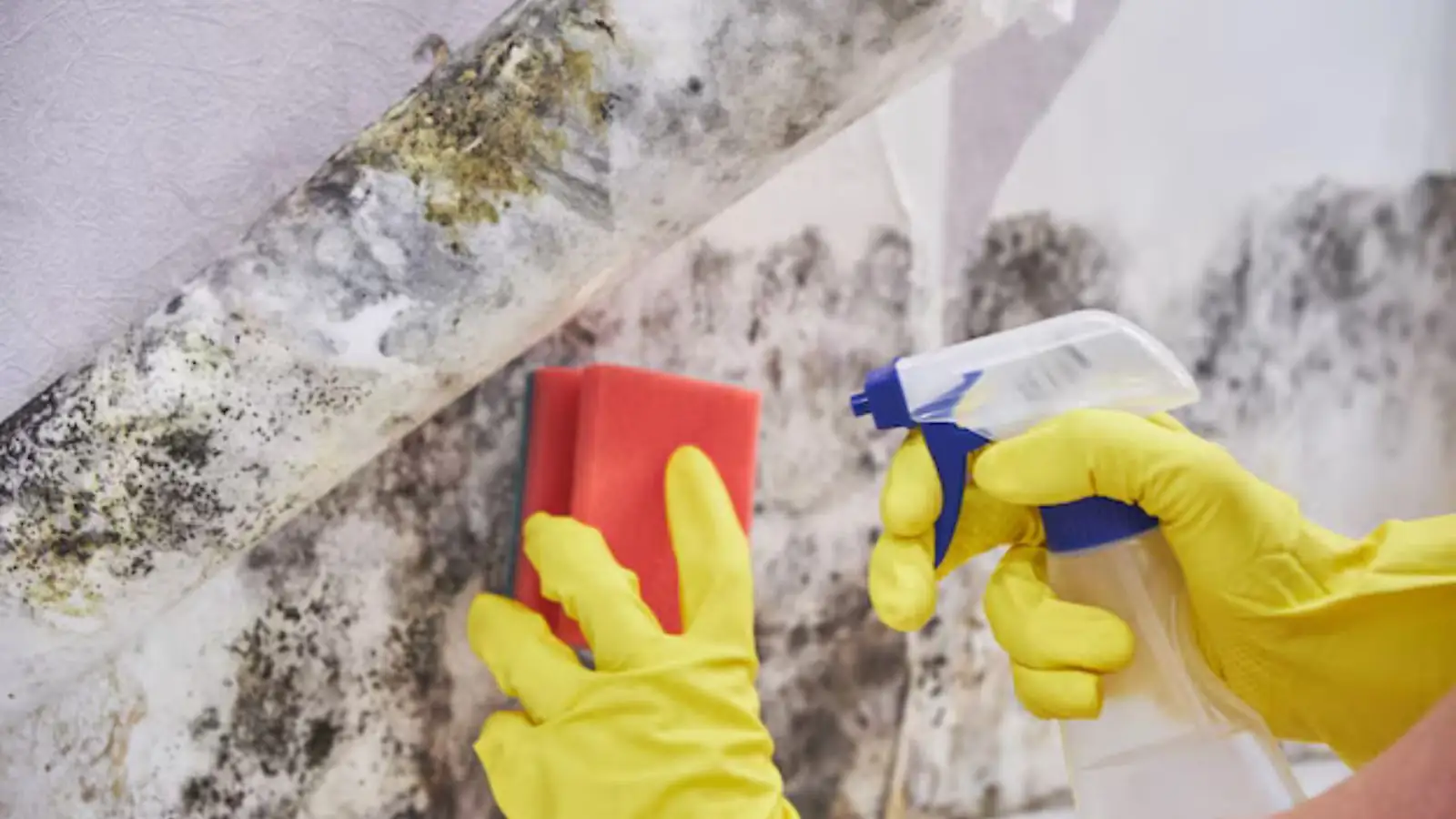
The small-area boundary
Plenty of homeowners clean a little mold every year, and for a small patch on a hard, non-porous surface such as glazed tile or a metal window frame, that can be a reasonable call. The key word is small, along with a clearly identified moisture source that has already been fixed.
The boundary shifts toward professional help when any of these are true. The growth is on drywall, carpet, insulation or wood framing. It covers a large area. It keeps returning after cleaning. Or you do not know where the moisture is coming from.
If you do clean something yourself, protect your eyes and hands, keep the work area closed off from the rest of the house, and avoid dry brushing. Health questions about exposure belong with a physician.
Safety steps before you start
Before you clean anything, set up the space so you are not breathing or spreading what you disturb.
- Wear an N95 or better respirator, gloves and eye protection before touching affected material.
- Keep children, pets and anyone with breathing concerns out of the area.
- Do not dry-brush or sweep growth, since that spreads spores through the room.
- Do not mix bleach with ammonia or other cleaners.
- Stop and call a professional if growth covers a large area, returns after cleaning, or sits inside walls.
Not sure which side of the line your mold falls on? Phone dispatch, name the surface and the size, and we will tell you what a first visit checks.
☎ (760) 769-1159DIY or professional at a glance
| Question | Homeowner cleanup | Professional remediation |
|---|---|---|
| Best suited to | Small, surface growth on hard materials with a known, fixed cause. | Growth in porous materials, larger areas or an unknown source. |
| Containment | Usually a closed door and basic precautions. | Sealed work area, often with negative air and filtered exhaust. |
| Air handling | Standard household filtration at best. | HEPA air filtration during and after the work. |
| Removal of materials | Limited to what can be scrubbed. | Cutting out and bagging affected drywall, pad or insulation. |
| Moisture check | Visual, perhaps with a basic meter. | Moisture mapping before, during and after. |
| Documentation | Your own photos. | Written scope, photos and a record of readings. |
| Clearance | None beyond your own look. | Optional testing after work to confirm the target was met. |
None of this means DIY is wrong. It means the tools match the job, and mold in a wall cavity is a job for different tools.
What a professional protocol adds
Professional mold remediation follows a defined sequence. The S520 standard from ANSI/IICRC lays out the planning and the sequence. Ask each bidder whether its crews work to it and what that looks like on your job.
- An assessment finds the extent of the growth and the moisture behind it.
- The work area is contained so material does not travel through the house.
- Filtered air equipment runs during removal, and the area is kept under controlled airflow.
- Affected porous materials are removed and bagged inside the containment.
- Surfaces are cleaned, dried and checked with moisture readings.
- The area is inspected, and testing may follow to confirm the work met its target.
Containment is the step most often skipped in casual cleanups, and it is the one that matters when the surrounding rooms are clean. It is also why a quick scrub of a ceiling can spread a problem.
Clearance testing and the home sale or loan question
Real estate adds a twist. A buyer's lender or inspector may ask for evidence that a mold problem was addressed, and a seller may want a record that the work was finished.
Clearance testing is the usual answer. After removal, an independent tester takes samples and compares them with a target, and the report goes into the file. We cannot promise that any lender or buyer will accept a report, because that decision belongs to them, so ask your lender what it wants in writing before work begins.
If you are planning a sale, tell the contractor early. Scope, timing and documentation can be set up around the testing step instead of squeezed in afterward.
Mistakes that make a mold job worse
- Cleaning before the leak is fixed, which gives the growth the moisture it needs to return.
- Painting over stains with a sealing primer while the wall is still damp.
- Running a fan across the area, which pushes material into other rooms.
- Tearing out drywall without sealing the doorway, which spreads dust through the house.
- Skipping photos, which leaves nothing to show an insurer or a buyer later.
Most of these mistakes come from hurry, which is understandable when a patch appears the week before guests arrive. A short pause to fix the source and plan the cleanup usually saves time overall.
What shapes the cost
- The size of the affected area and how deep it goes into the material.
- Which materials are involved, since drywall, pad and insulation get removed while hard surfaces are cleaned.
- The level of containment and air filtration the layout requires.
- How many days of drying the structure needs afterward.
- Whether clearance testing is included and how many samples are taken.
- The amount of rebuild work once the affected materials are gone.
These factors explain why two jobs that look the same in a photo can end up with different scopes. Request the scope in writing and a walk-through of the price ahead of the first cut.
Rebuilding after the mold is gone
Removal leaves holes. Once the area is clean, dry and cleared, new insulation, board and finishes go back in, and that stage is covered by water damage repair. Plan the rebuild before removal begins so the same crew or a trusted trade can close the walls promptly.
Estate properties in Rancho Santa Fe and coastal homes in Solana Beach raise the same basic questions as a house in Encinitas, whether the growth sits in a guest suite or a laundry room. For the removal stage itself, ask any provider how it handles containment and documentation.
Encinitas note: contractor licensing and permits
Any job priced at $500 or more, labor and materials together, needs a licensed contractor under California rules published by the Contractors State License Board. The board also suggests keeping a deposit to 10 percent or $1,000, whichever is lower. Verify a license at cslb.ca.gov or through 800-321-CSLB (2752), and make sure it matches the trade.
For the rebuild phase, phone the City of Encinitas Building Division at 760-633-2730 and put the permit question to them directly. The division sits inside Encinitas Development Services on S. Vulcan Ave, and filings run through the Customer Self Service portal online. Learning the answer before demolition keeps your schedule intact.
Frequently Asked Questions
A small patch on a hard, non-porous surface with a fixed cause is something some homeowners handle. Mold in drywall, carpet, insulation or framing, or any larger area, is better assessed first.
Cleaning and cutting can release material into the air. Containment keeps the work area separate, and HEPA filtration captures particles so they do not travel through the home.
It is testing after removal to confirm the cleaned area meets an agreed target. It is optional in many cases, but it can matter for a home sale, a loan or a dispute, so ask who requires it.
California requires a contractor license for projects of $500 or more. Check any contractor at cslb.ca.gov or 800-321-CSLB, and find out if the state licenses mold work as its own category.